Nivritee Research · The economy & your money

How the economy reaches your household

Interest rates, inflation, recessions and house prices, and what each one does to a family’s budget, loans and savings. 4 articles, every figure sourced.

Interest rates and your money

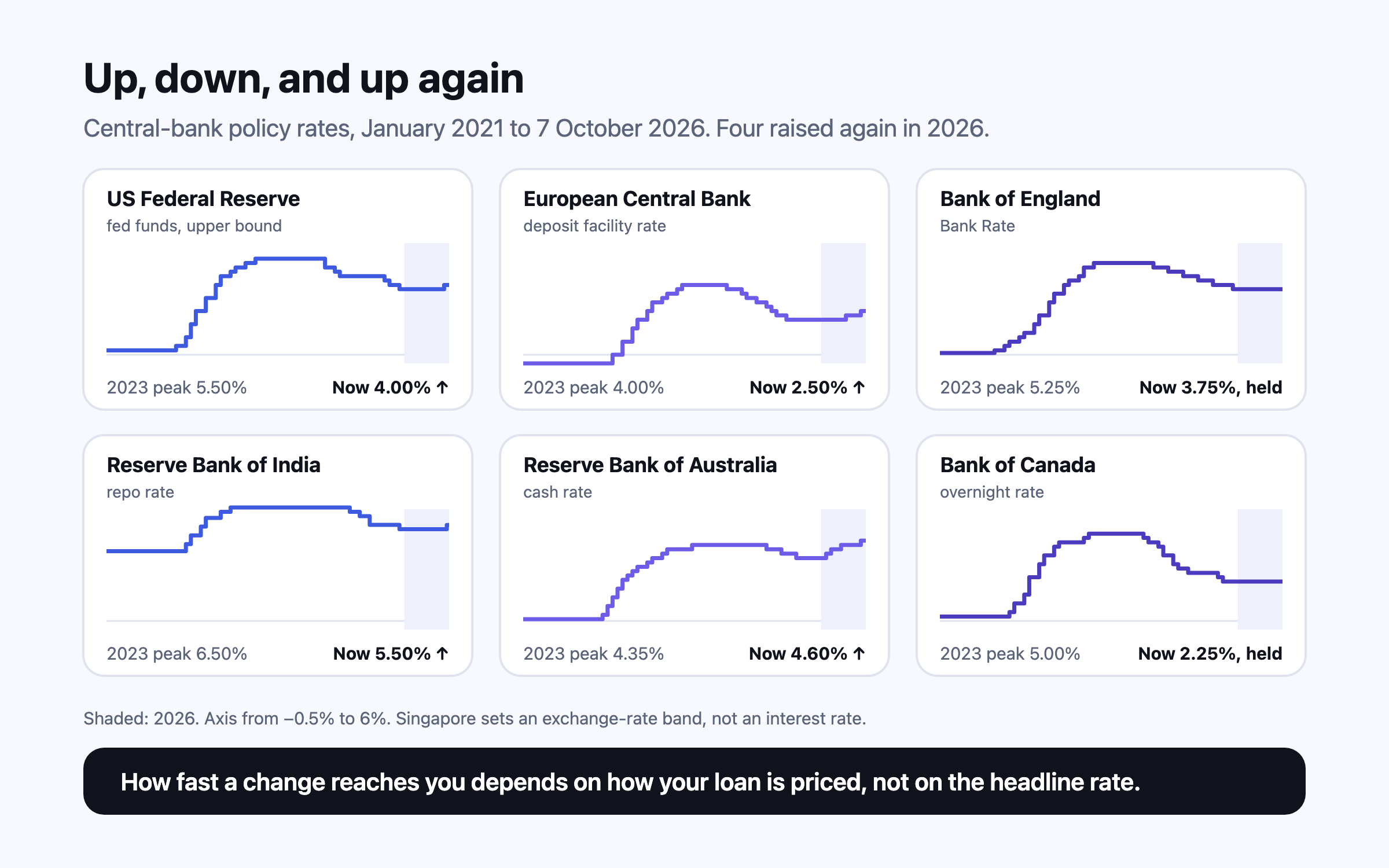
After cutting through 2024 and 2025, several central banks raised rates again in 2026 as energy prices, driven up by the conflict in the Middle East, pushed inflation back above target: the Fed to 3.75–4.00% in September, the RBA to 4.60%, the ECB to 2.50% and, on 7 October, the RBI to 5.50%. A rise reaches a US household with a 30-year fixed mortgage barely at all, an Australian or Indian floating-rate borrower within months, and a British or Canadian one when their fix ends. Savers gain, but more slowly than borrowers pay.
The economy & your money

Every article on this topic

Rent or buy a home? The numbers in six cities

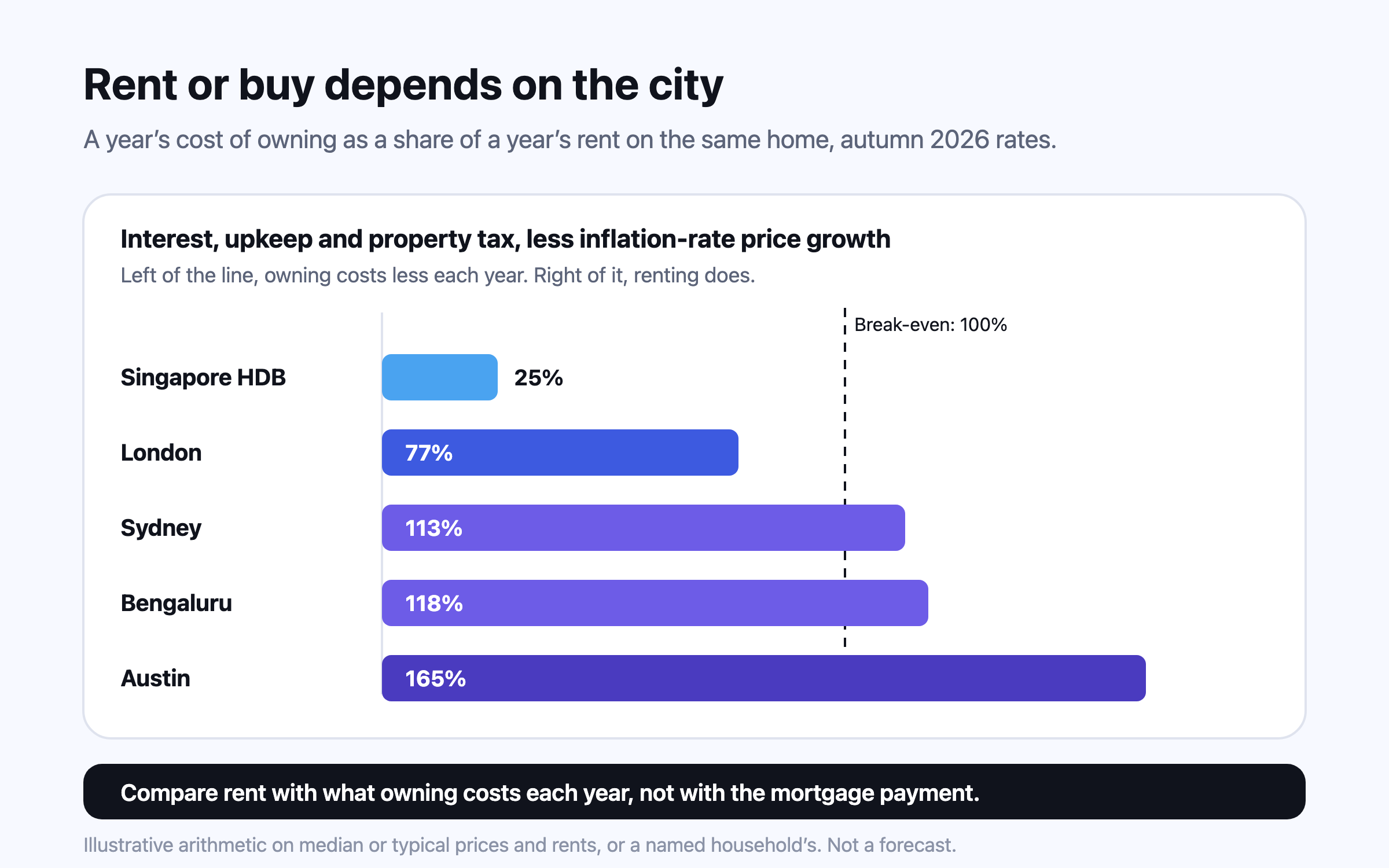
Compare rent with the unrecoverable cost of owning — interest, upkeep, property tax and the return your deposit gives up, less expected price growth — not with the mortgage payment. At autumn 2026 rates, owning the average London home costs somewhat less than renting it, an Austin home costs far more to own than to rent, and an HDB flat in Singapore costs far less. Transfer taxes then decide how long you must stay.

The inflation shock and household budgets

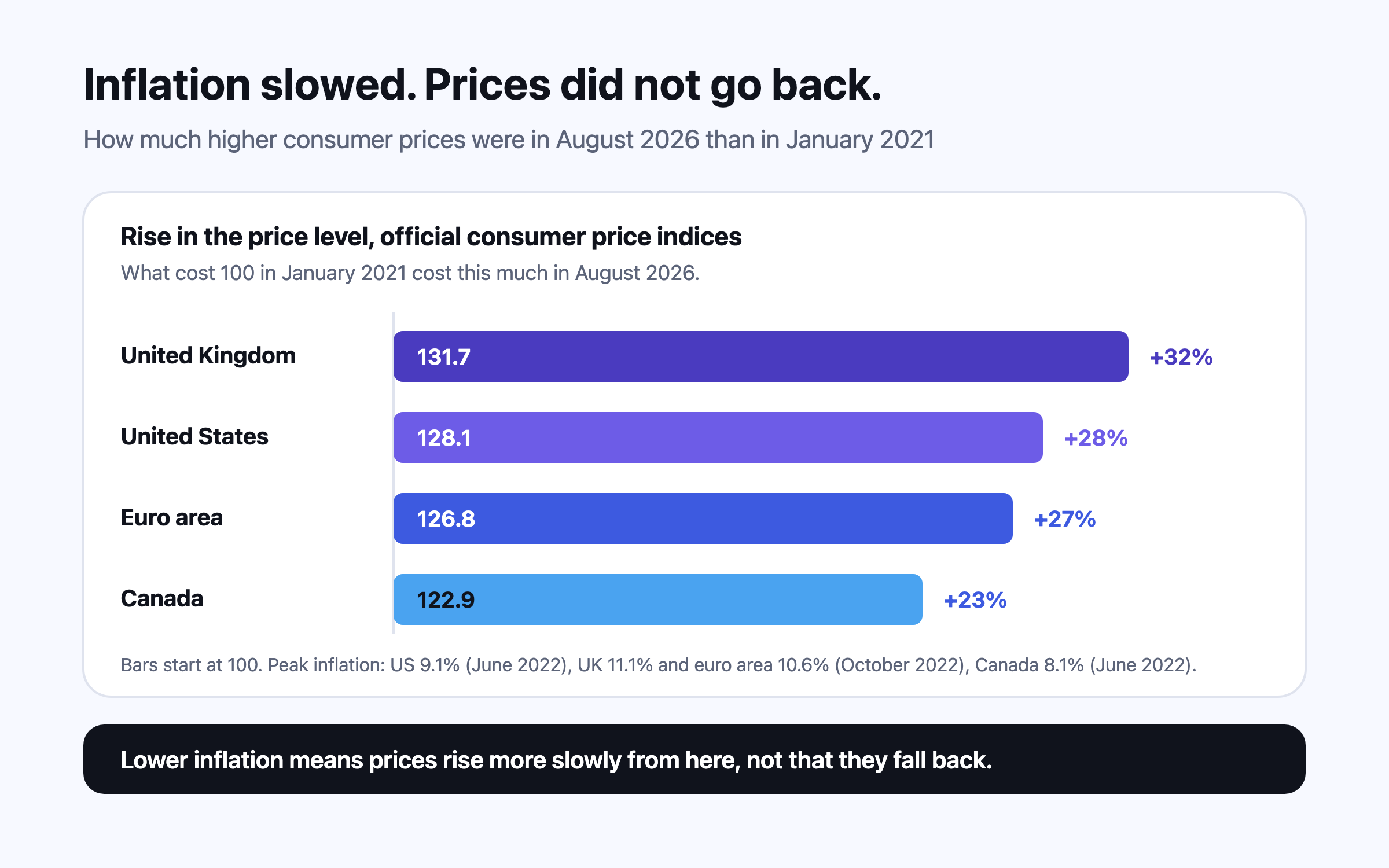
Inflation peaked at 9.1% in the US, 11.1% in the UK and 10.6% in the euro area in 2022, and pay fell behind prices almost everywhere. Inflation then slowed, but the price level never came back down: US consumer prices in August 2026 were about 28% above January 2021, UK prices about 32%. A 2026 energy shock has pushed inflation up again, to 3.8% in the euro area in September. Budgets, pay talks and long-term plans all have to work from the new price level.

Recessions, jobs and markets: what history shows

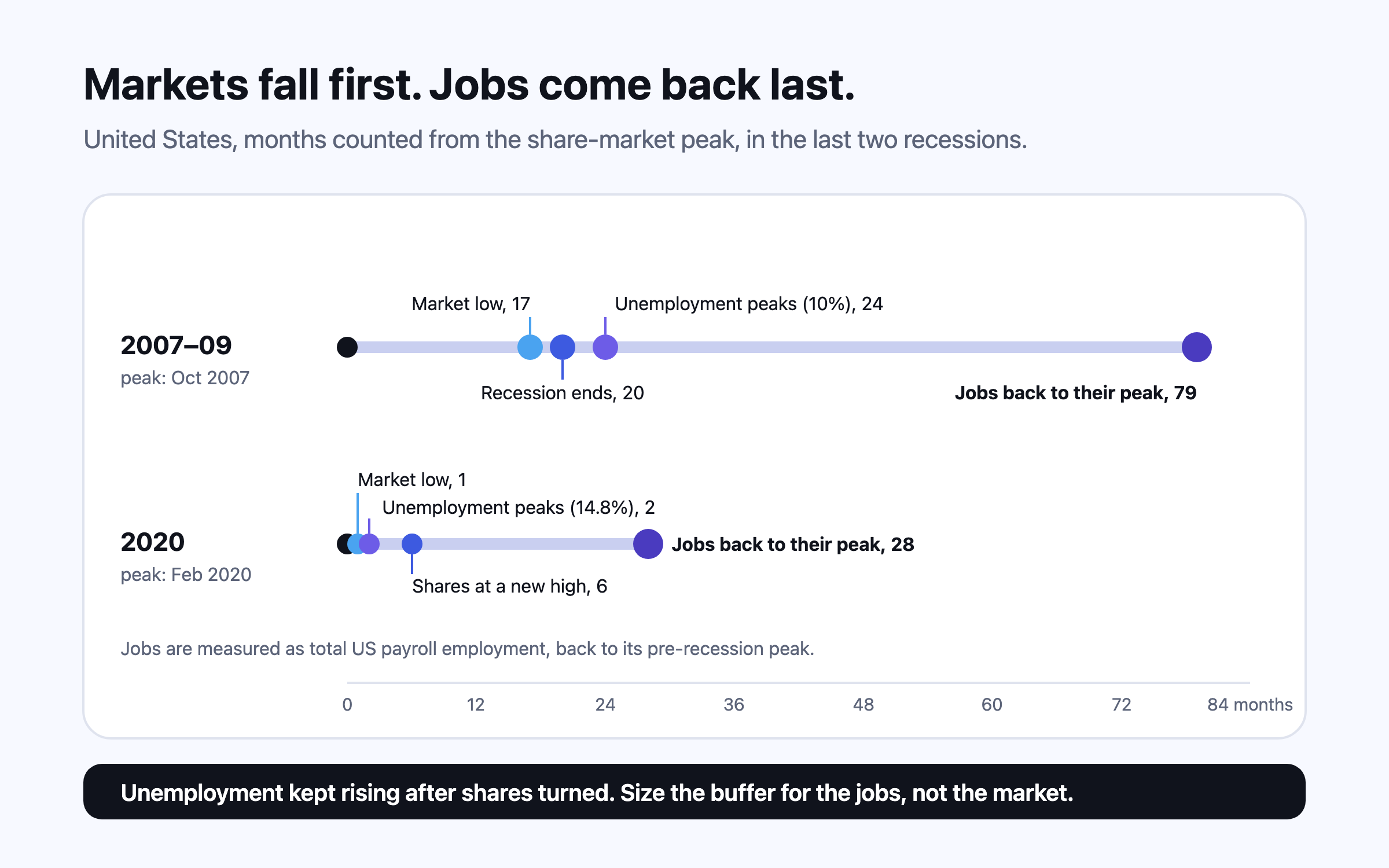
In the US the share market bottomed in March 2009, unemployment peaked seven months later at 10%, and payroll jobs did not regain their early-2008 level until May 2014. The cash that carries a household through is sized by how long a search can take in a bad year — the median reached 25 weeks in 2010 — and the portfolio is protected mostly by not being sold at the bottom.

Now run the numbers on your own money.

Nivritee projects your family’s plan in the country you will live in, tracks every investment in one currency, and shows where each pound, dollar or rupee should sit. Free, and nobody here reads your plan.

Start free