Nivritee Research · Education & children

What higher education costs, returns, and how families pay

Fees and living costs at home and abroad, the earnings a degree buys, student debt, and keeping your own independence on track. 5 articles, every figure sourced.

Cost of university by country: home vs international

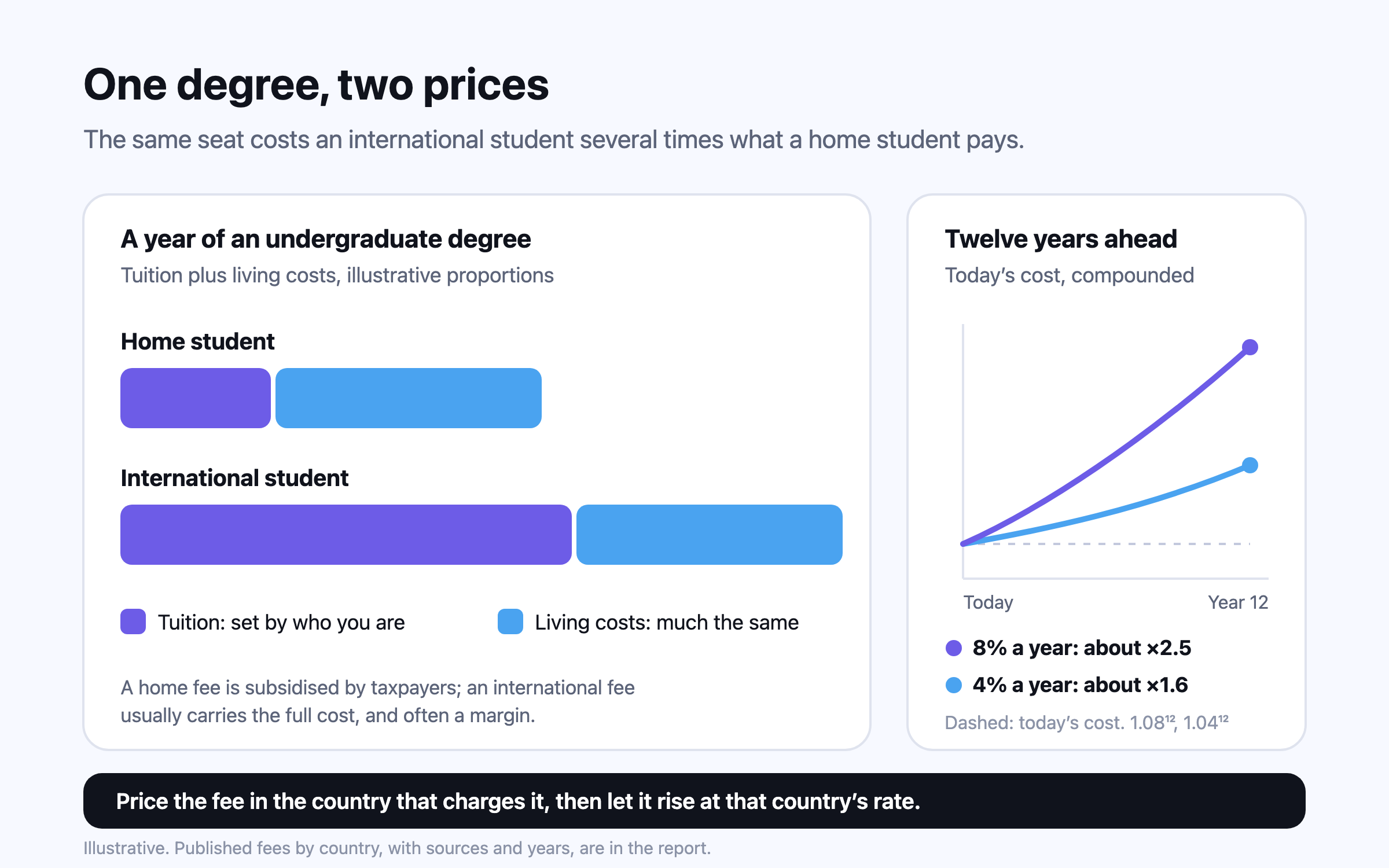
In every destination that charges tuition, an international undergraduate pays several times the home fee: about 5.2 times in Canada, 2.2 to 4.8 times at NUS in Singapore, and three times at IIT Hyderabad. Germany is the exception, charging most students only a semester contribution. Living costs are the part nobody subsidises, and a fee twelve years away should be priced at that country’s education inflation, not today’s figure.
Education & children

Every article on this topic

Is a degree worth it? Earnings data by country

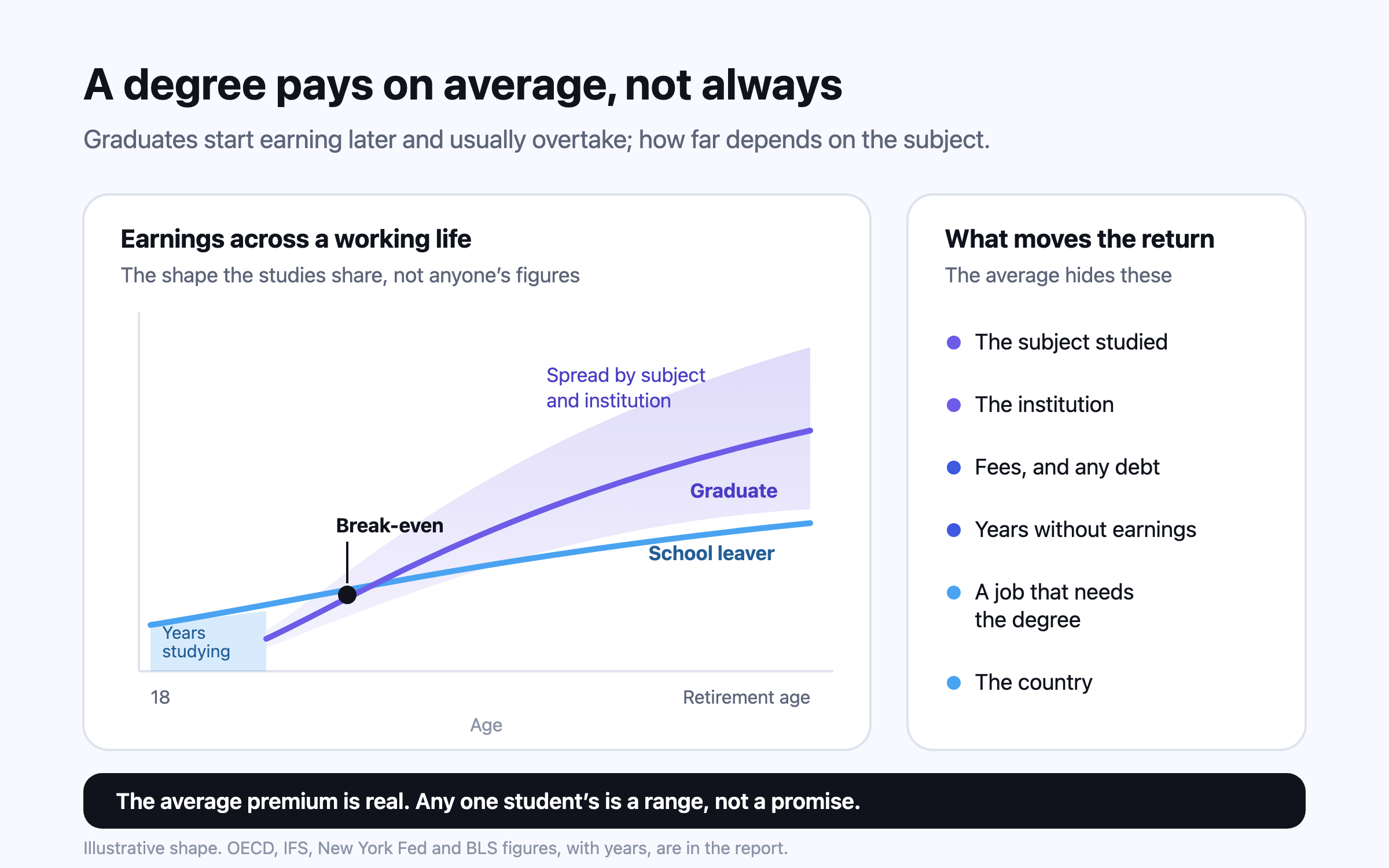
Across the OECD, adults with a tertiary degree earn 54% more than those who stopped at upper secondary school, and are more likely to be in work. The average hides a wide spread: in England about 20% of women and 30% of men can expect a negative lifetime return, and the subject studied makes a very large difference. A degree is usually worth it; whether a particular one is depends on the subject, the cost and the country.

Student loans compared: US, UK, Australia, Canada

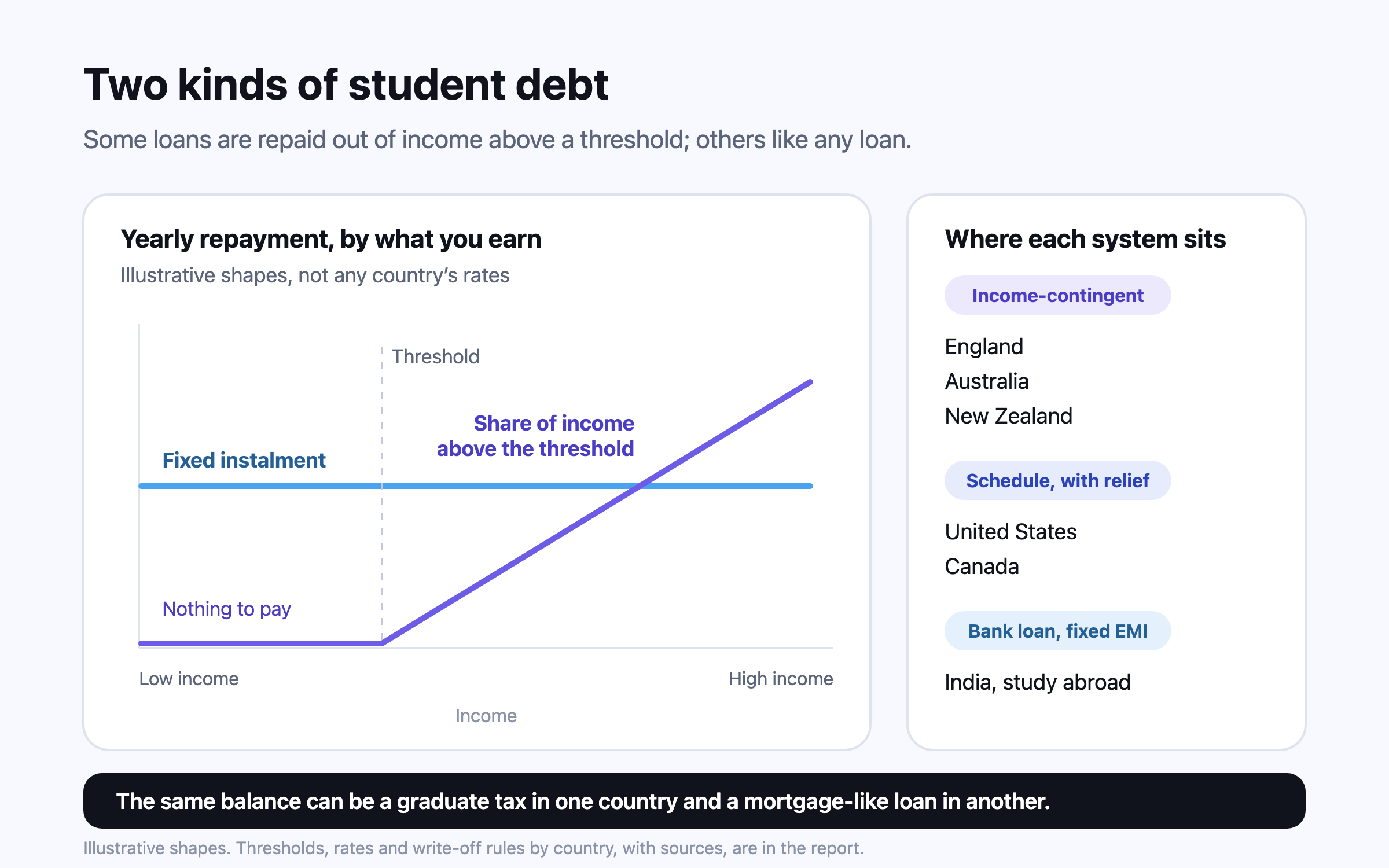
Student debt comes in two shapes. Income-contingent systems — England, Australia, New Zealand — take a share of income above a threshold and, in England, write off what is left after 30 or 40 years. Loans in the US, Canada and India have a schedule, with income-based relief in the first two and a fixed EMI in the third. The shape decides what the debt does to a household’s saving far more than the balance does.

Saving for a child’s education, by country

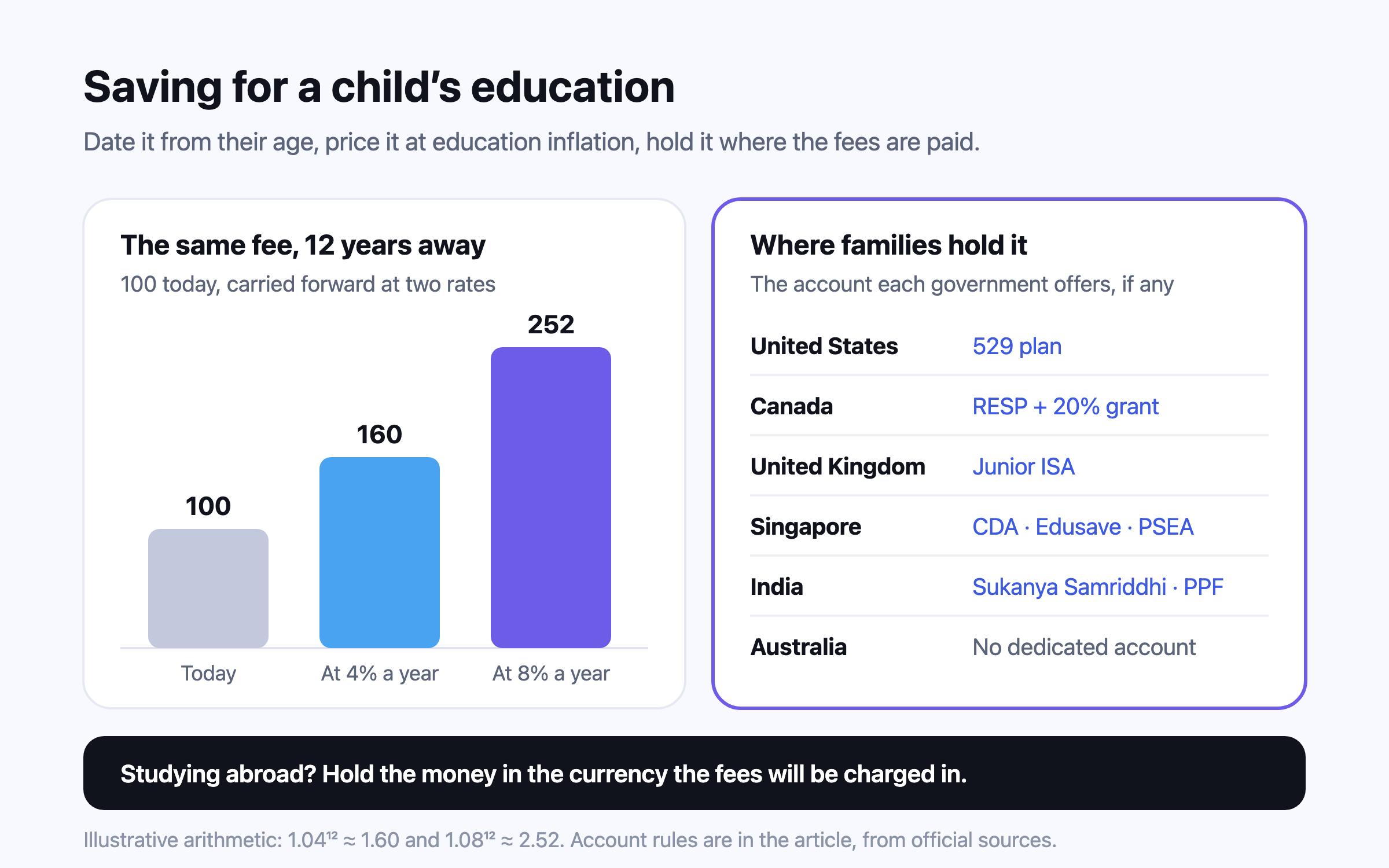
Count the years from your child’s age to about eighteen, price the course today, and carry it forward at education inflation rather than general inflation — in Nivritee’s defaults, 3.0–8.0% a year against 2.0–4.0%. Then use the account your government offers where one exists, and hold the money in the currency the fees will be charged in.

Child’s education or your own retirement savings?

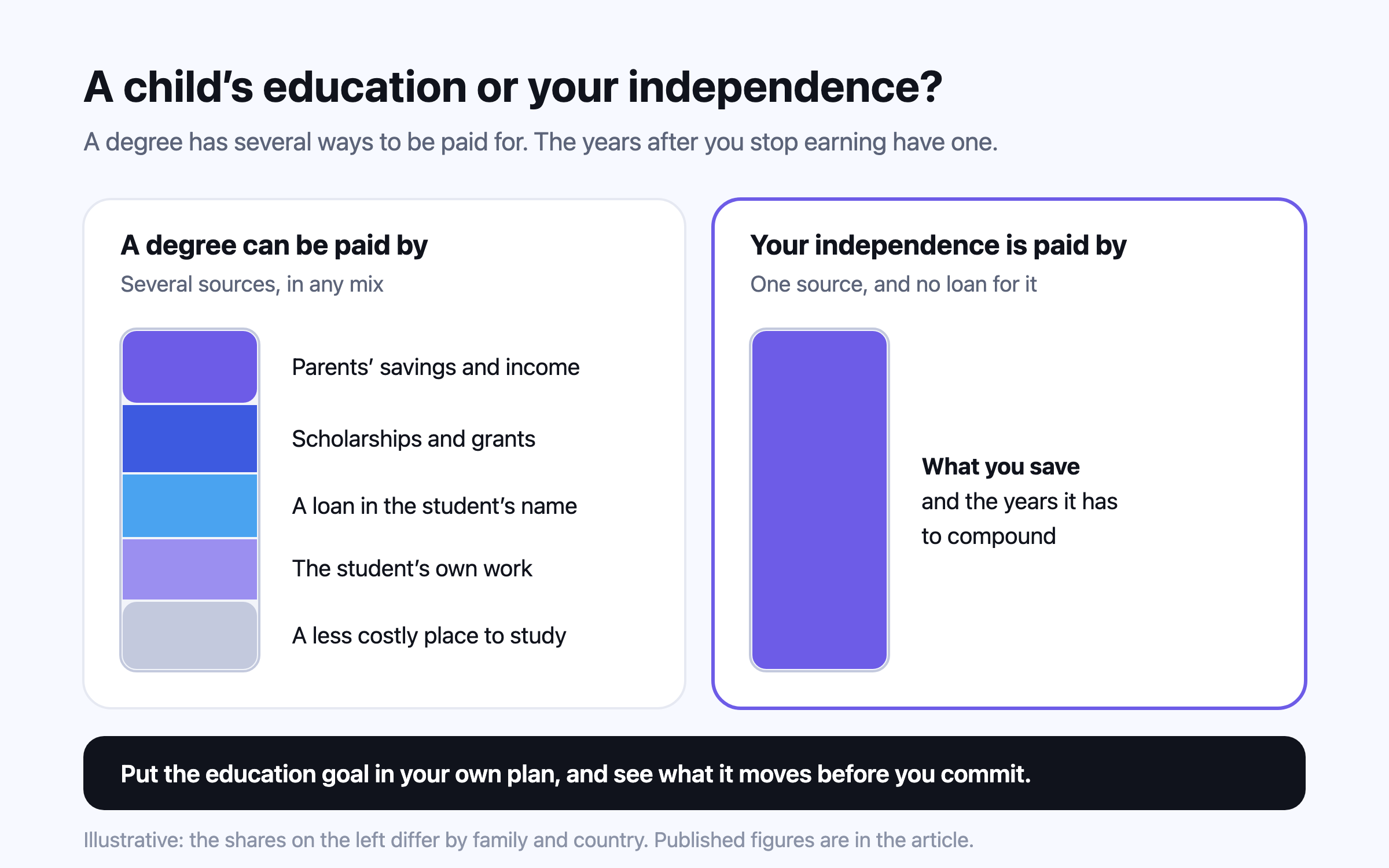
Most parents put a child’s education first, and many quietly save less for themselves to pay for it. Planning bodies argue the other way round: education can be funded several ways, while nobody lends you money to live on later. The useful step is not choosing one, but putting the real cost — at home or abroad — into your own plan and seeing what it moves.

Now run the numbers on your own money.

Nivritee projects your family’s plan in the country you will live in, tracks every investment in one currency, and shows where each pound, dollar or rupee should sit. Free, and nobody here reads your plan.

Start free