Nivritee Research · Retirement & FIRE

Retirement and financial independence

How much is enough, what state pensions pay, catching up late, and what the research on safe withdrawals says. 7 articles, every figure sourced.

How much do you need to retire? A worked answer

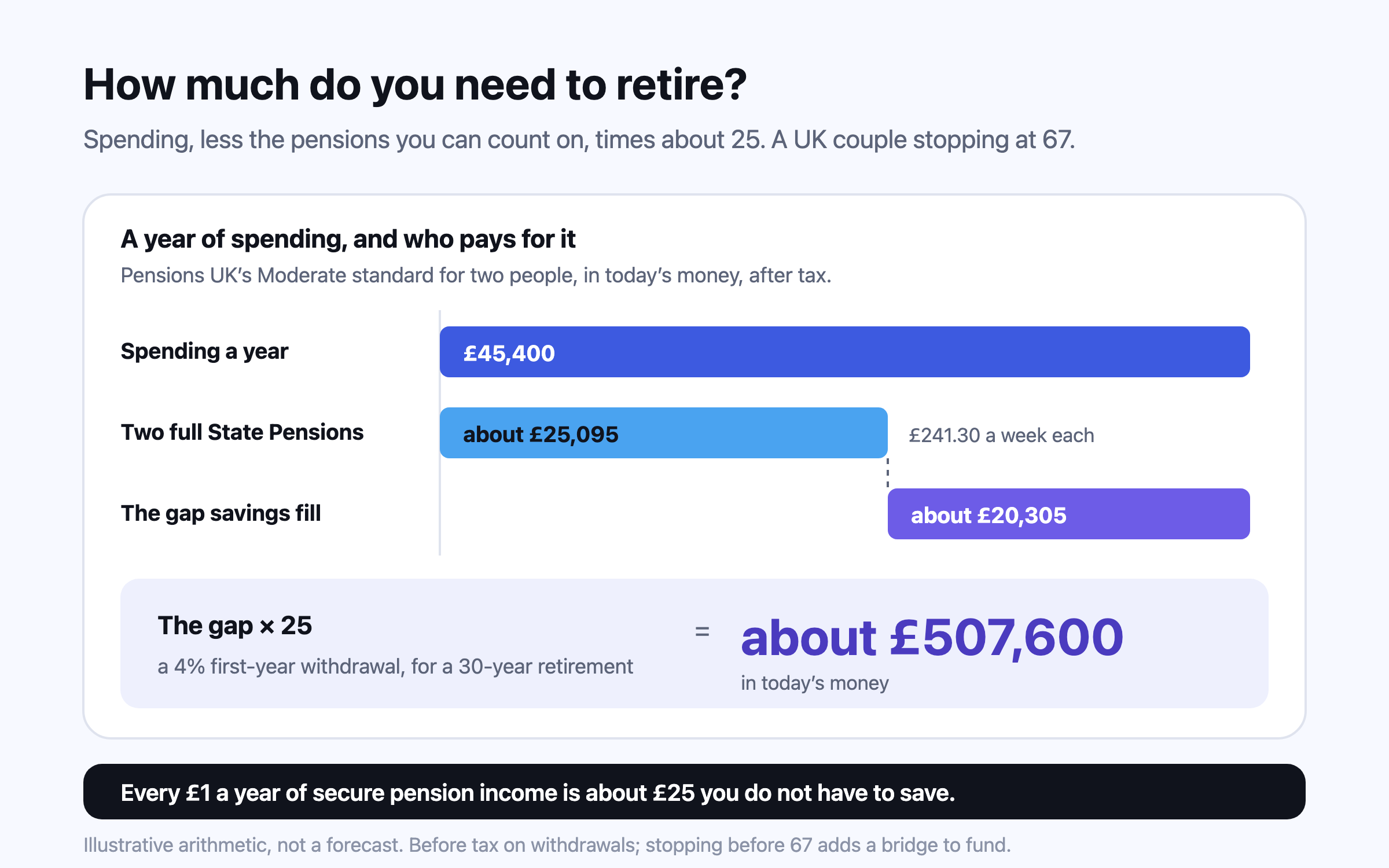
Start from what you will spend, not from what you earn. Subtract the state and workplace pensions you can rely on, and multiply what is left by about 25 for a 30-year retirement, or by closer to 30 for a 40-year one. Real spending has tended to drift down about 1% a year through retirement while healthcare rises, and a 65-year-old today can expect to live another 15 to 25 years depending on country and sex — so plan for the long end.
Retirement & FIRE

Every article on this topic

State pensions compared: what 10 countries pay

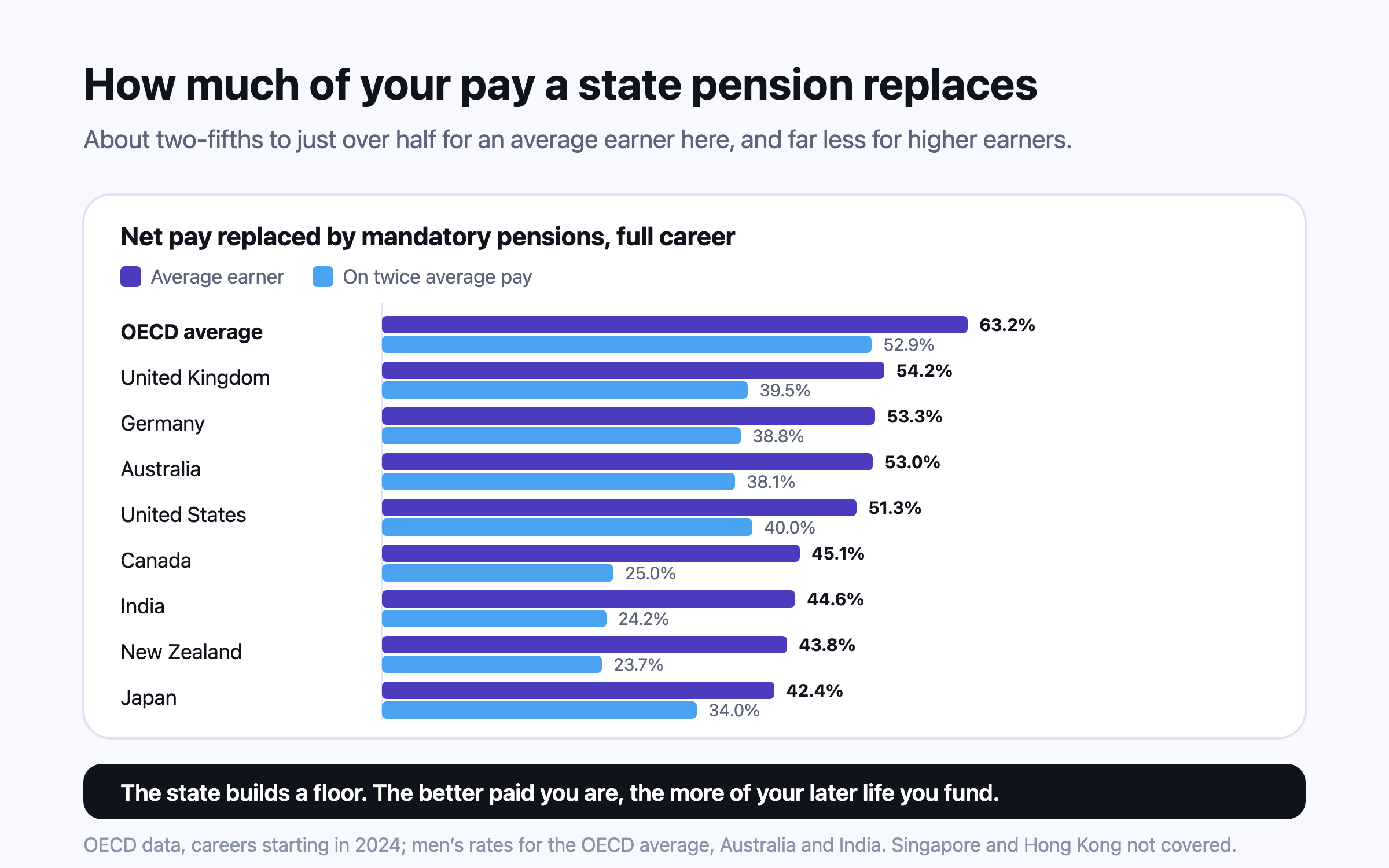
For a man on average pay, mandatory pensions replace 63.2% of net earnings on the OECD average, but around half in the US, UK, Australia and Germany and less in Canada, New Zealand, Japan and India. At twice average pay the share falls further, and Singapore, Hong Kong and India rely mostly on the worker’s own account. Here is what each system pays in 2026, how claiming age changes it, and what it leaves a middle-class household to save.

Catching up on retirement savings at 40 or 50

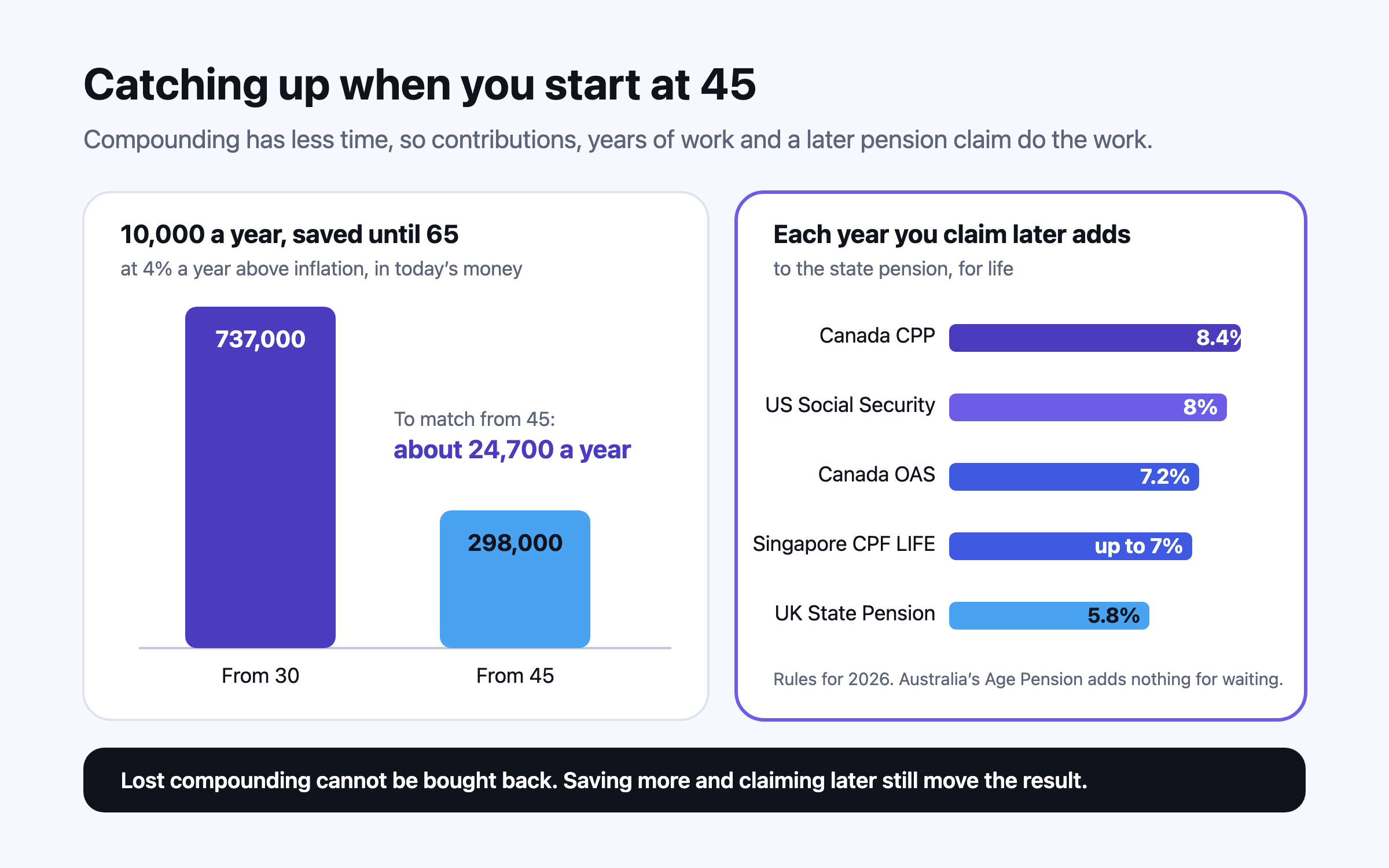
Most households in their late forties have less put by than the rules of thumb say, and in the US fewer than two in three families aged 45–54 hold a retirement account at all. Fifteen or twenty years is still long enough to change the result, but not through returns: the levers that work are a much higher saving rate, using the catch-up and carry-forward rules each country offers, working a few more years, and claiming the state pension later.

The 4% rule by country: safe withdrawal rates

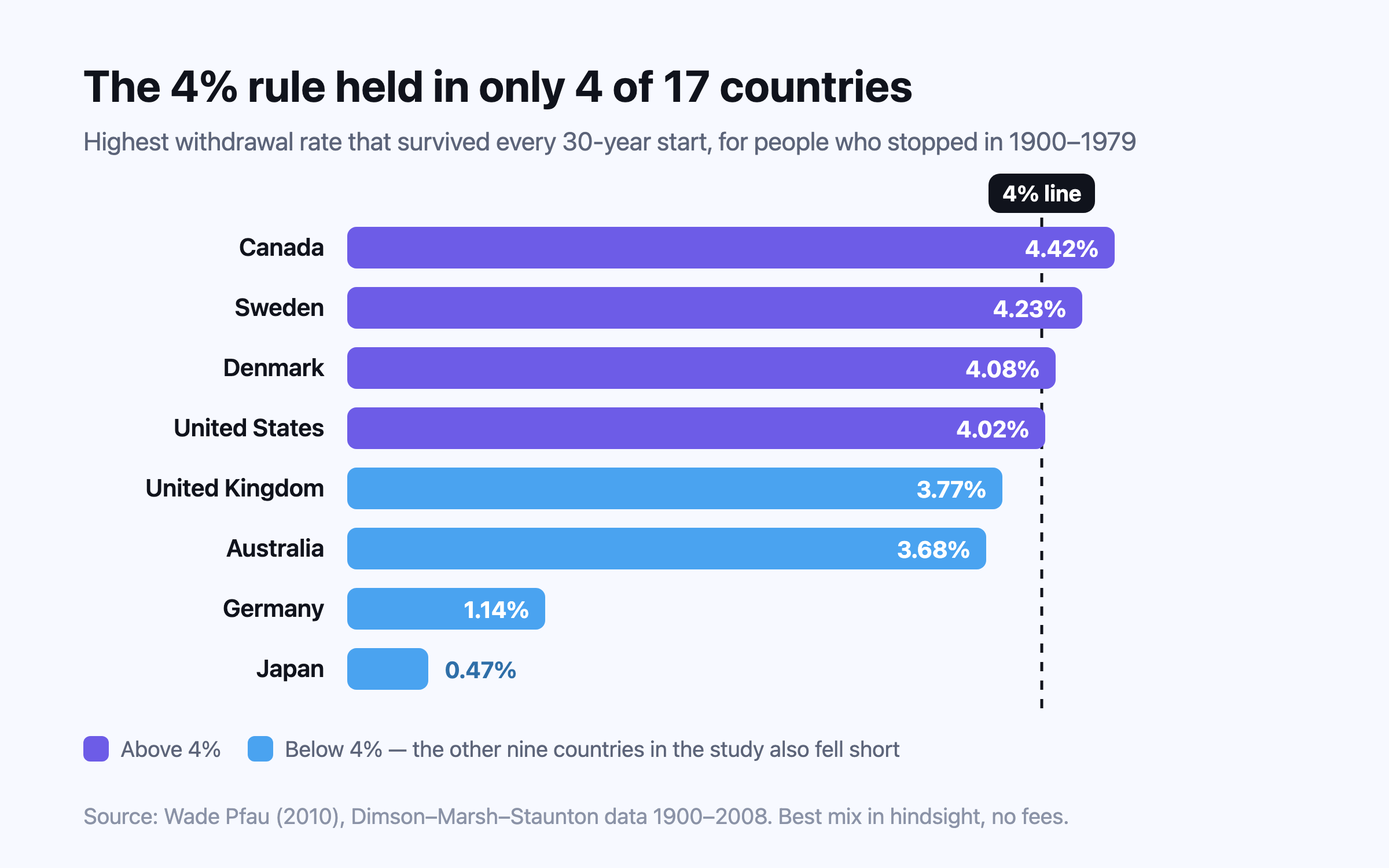
The 4% rule says a first-year withdrawal of 4% of savings, raised with inflation each year, lasted at least 30 years in US market history. Tested across 17 countries it held in only four, and longer horizons need lower rates — so treat it as a starting point to test against your own spending, country and timeline.

The bucket strategy for retirement income

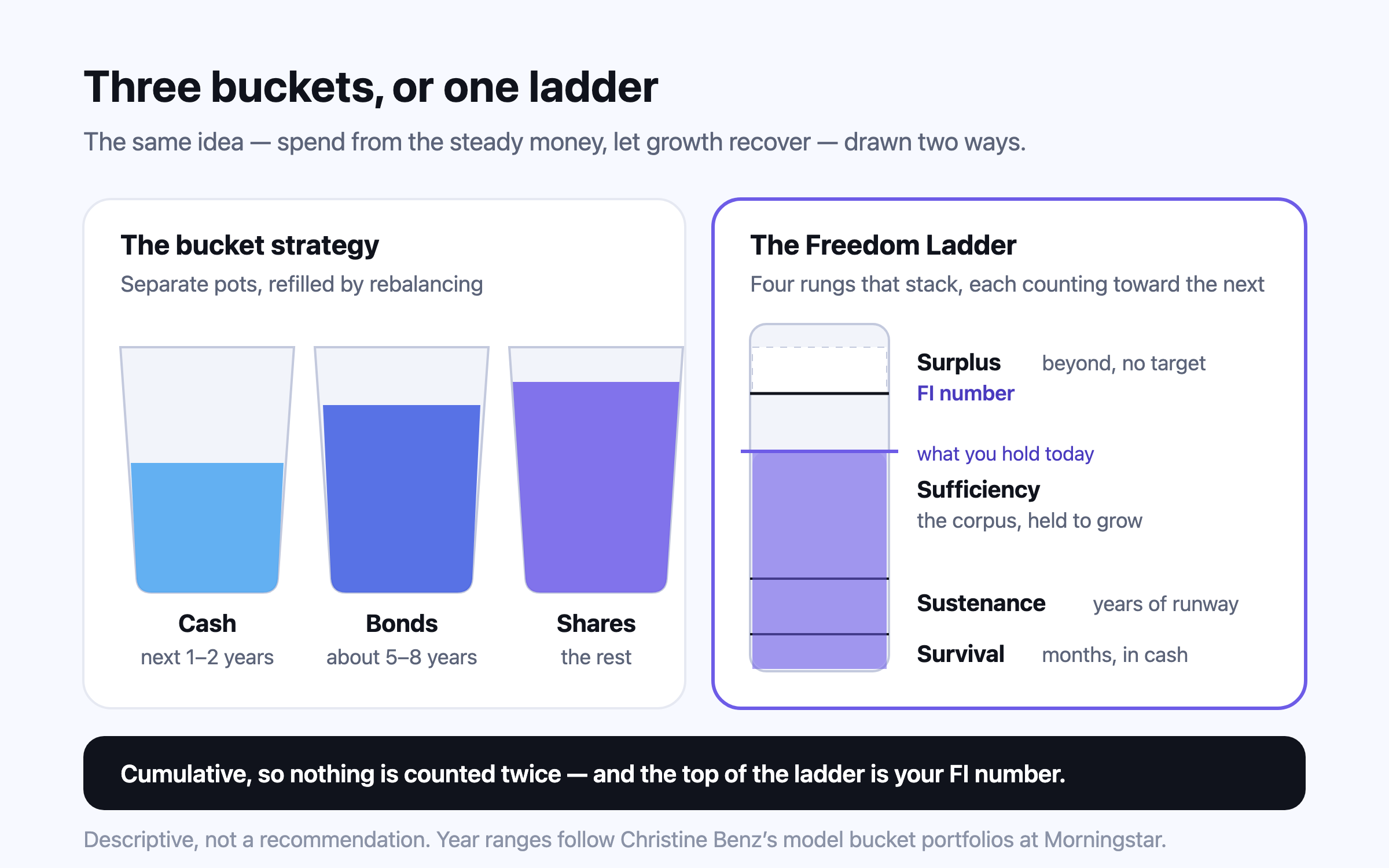
The bucket strategy keeps the next year or two of spending in cash, the following several years in bonds and the rest in shares, so a market fall never forces a sale. Studies find it does no better than a simple rebalanced portfolio on the numbers; its real value is behavioural, and it only works if the buckets are refilled with discipline.

Sequence of returns risk: why early years matter

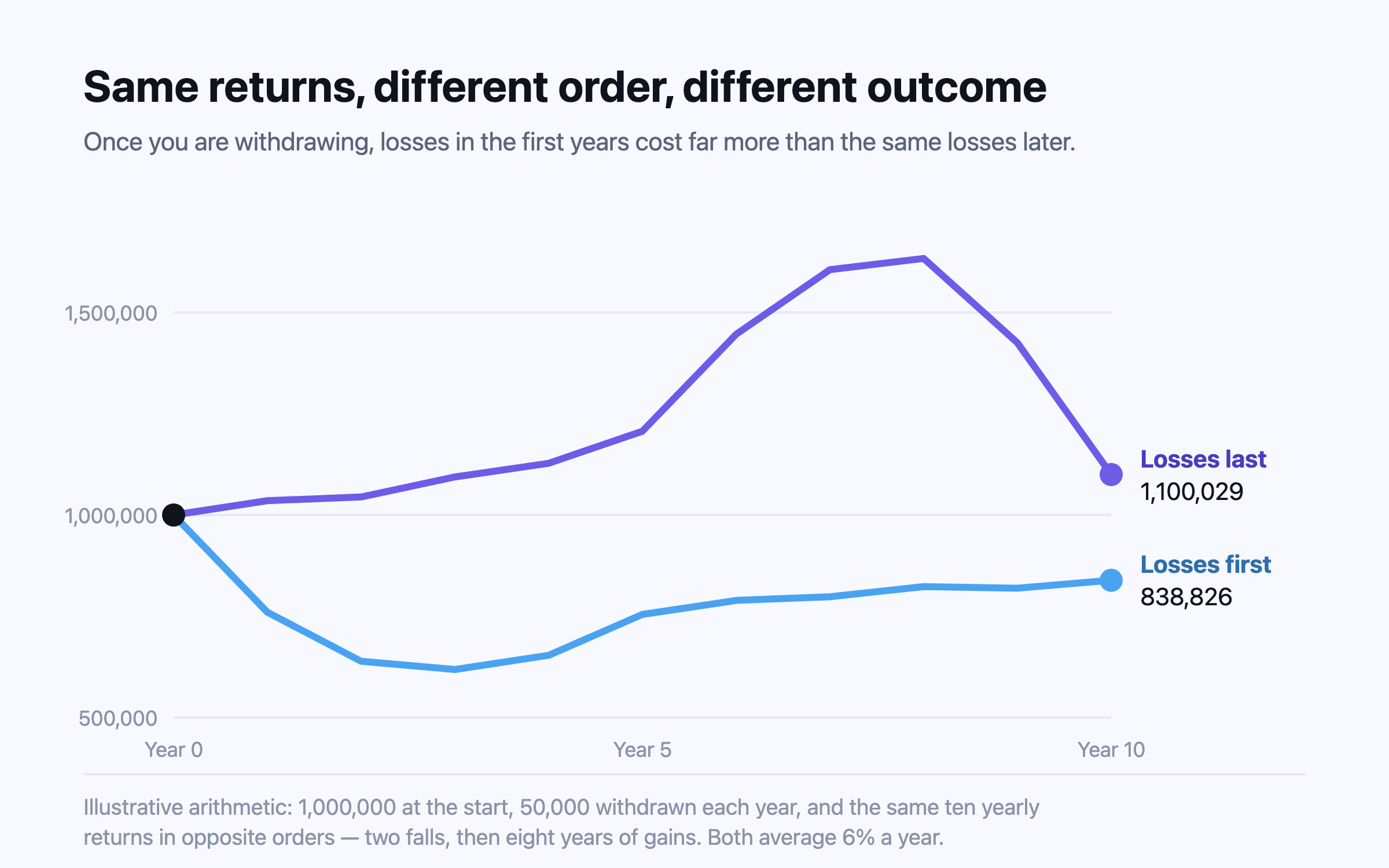
While you are saving, the order of good and bad years barely matters. Once you are withdrawing, a fall in the first few years forces you to sell low, and the money sold never recovers — so two people with the same average return can end decades apart. A cash runway, flexible spending and a modest starting withdrawal rate are the main defences.

The FIRE movement: what it gets right and wrong

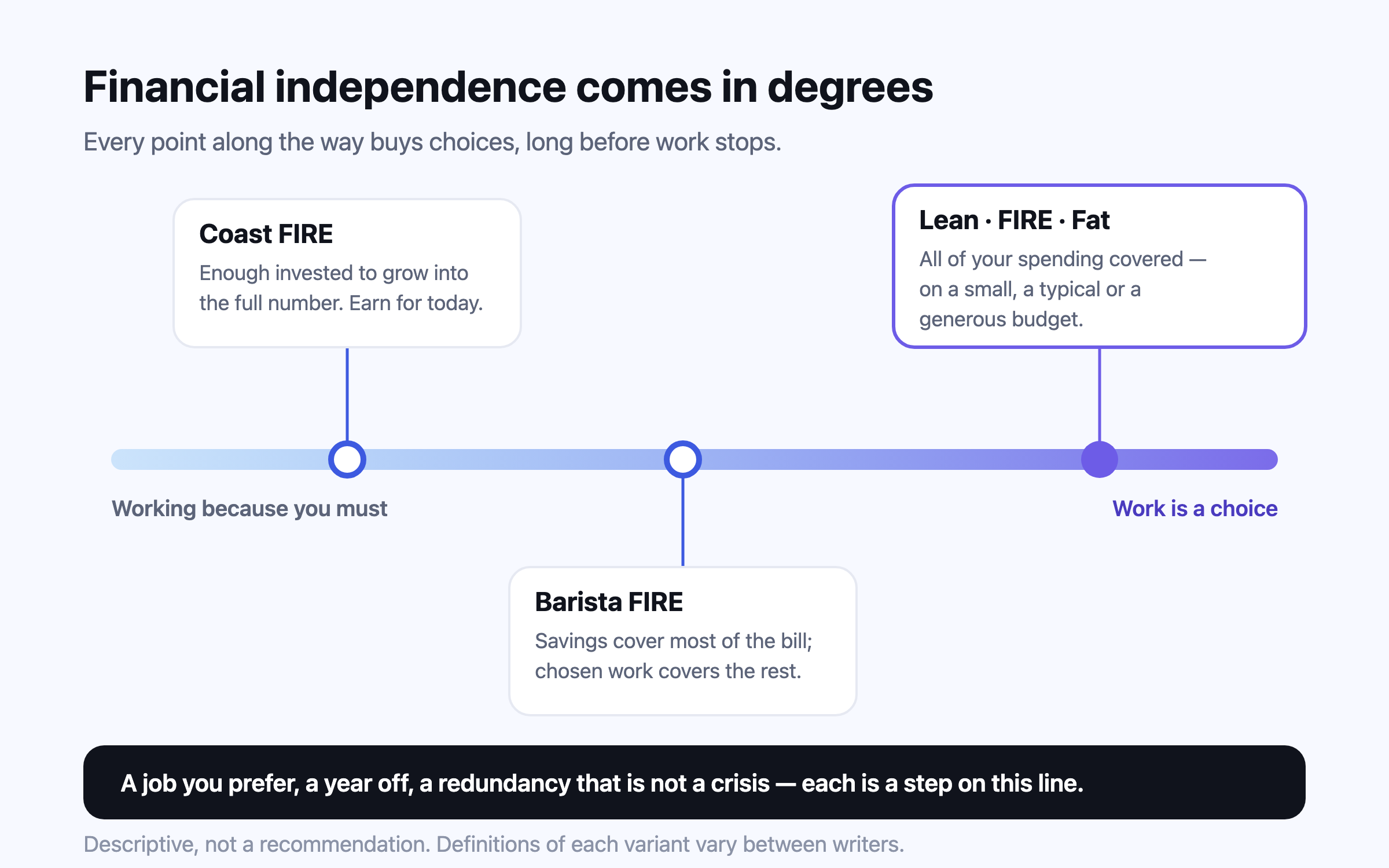
FIRE — financial independence, retire early — means saving a large share of income until your investments can cover your spending. Its core ideas about savings rate, conscious spending and owning your time hold up well; its weak points are healthcare, long horizons and market timing. Financial independence is worth having even if you never stop working.

Now run the numbers on your own money.

Nivritee projects your family’s plan in the country you will live in, tracks every investment in one currency, and shows where each pound, dollar or rupee should sit. Free, and nobody here reads your plan.

Start free