Nivritee Research · Money skills

Saving, spending, emergencies and insurance

Emergency funds, job loss, insurance, budgeting, saving more, and whether to pay off debt or invest. 7 articles, every figure sourced.

How big should an emergency fund be?

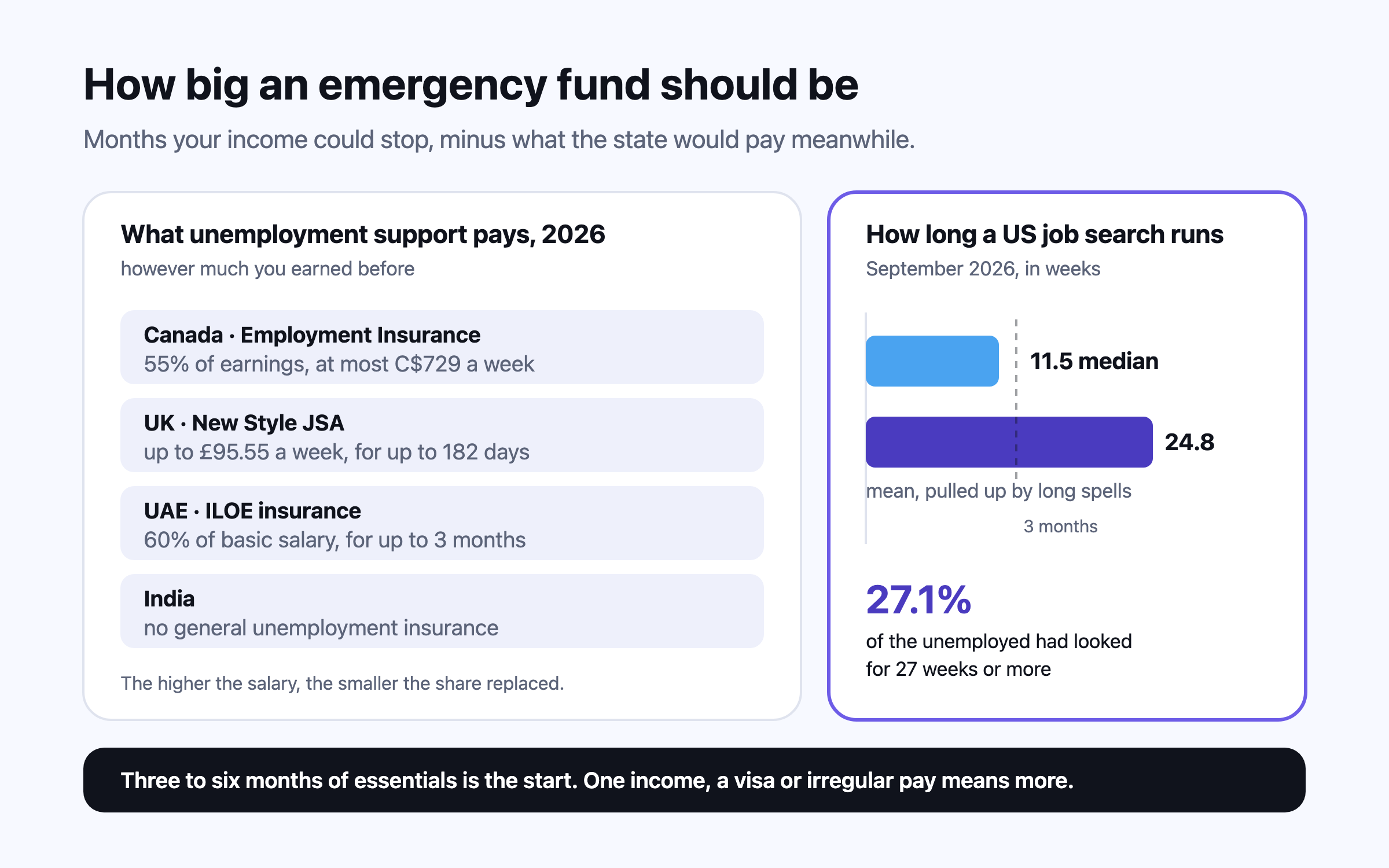
Three to six months of essential spending is a sensible starting range, but nobody can trace it to a study. The size that fits your household depends on how long a job search takes where you live, how much of your income unemployment benefits would replace — often far less than half for a middle-class salary — and whether a visa, a single income or irregular pay shortens the time you have.
Money skills

Every article on this topic

What to do after losing your job: first 90 days

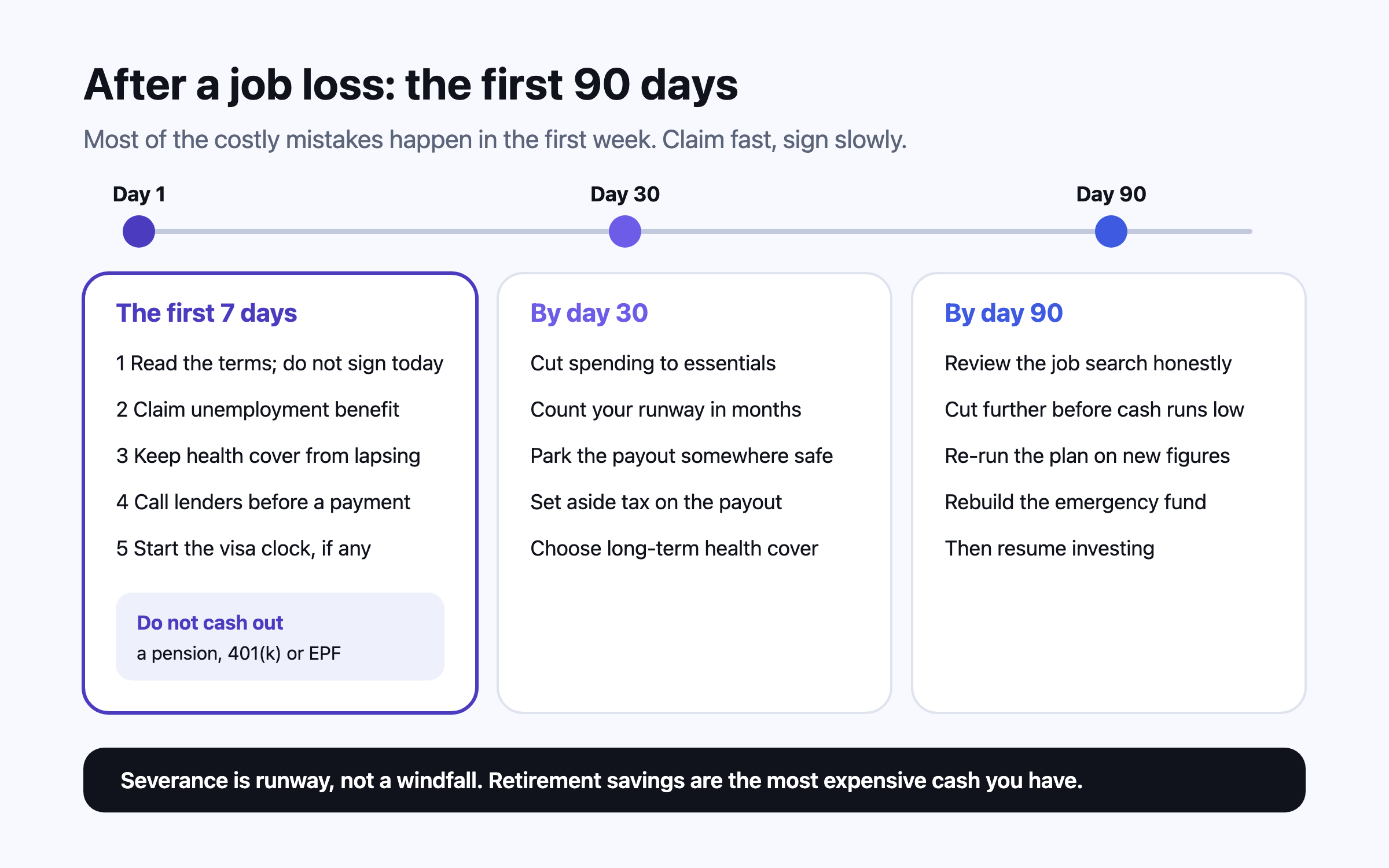
Most of the expensive mistakes after a layoff happen in the first fortnight: signing a severance agreement unread, claiming benefits late, letting health cover lapse, missing a loan payment without calling the lender, and cashing out retirement savings. This is the order to do things in, with the 2026 rules for the US, UK, India, Canada, Australia, Singapore and the UAE.

Insurance basics: what to buy first, how much

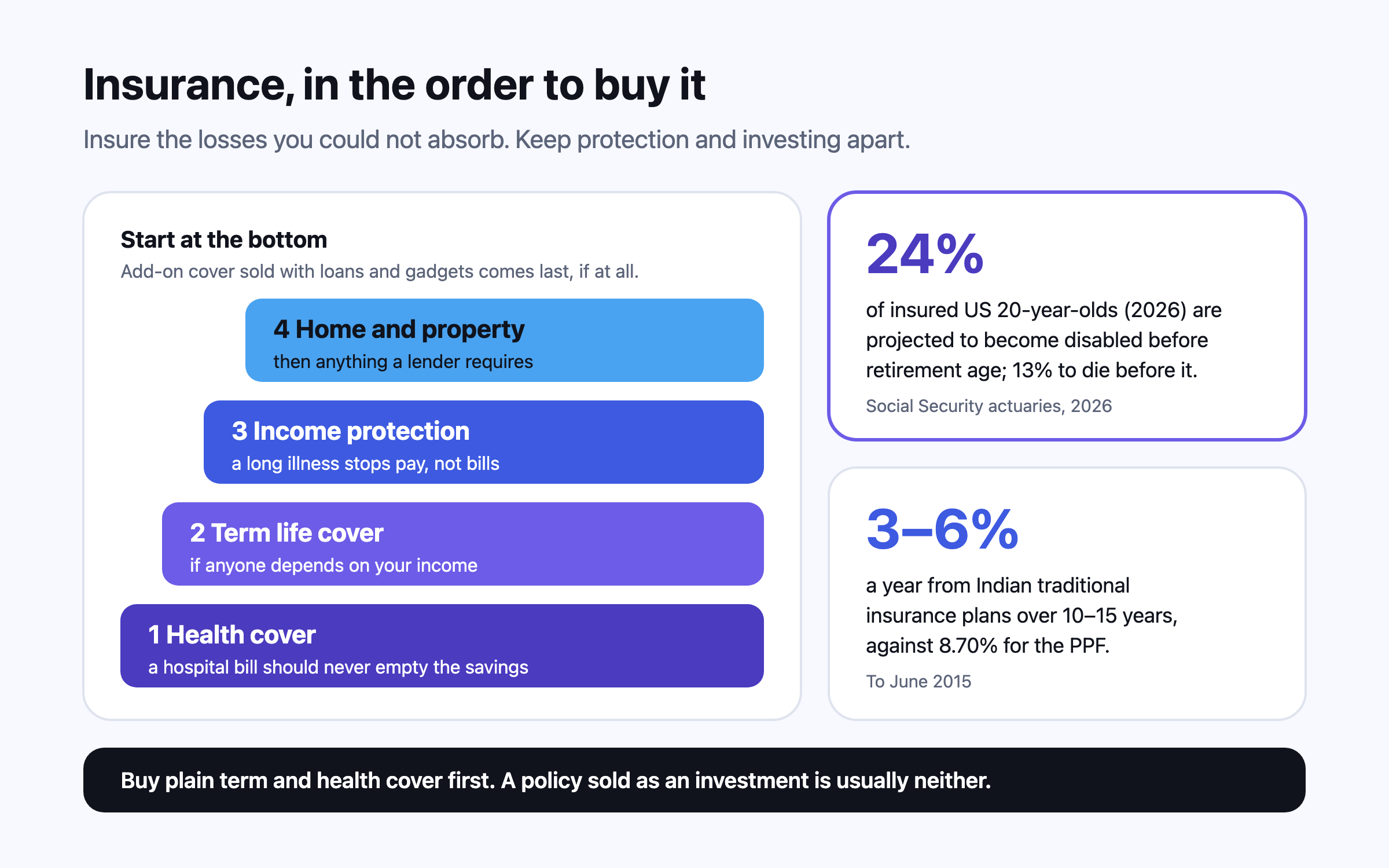
Insurance is for losses a household could not pay for itself: a large medical bill, the death of an earner somebody depends on, or years without income after an illness. Buy cover for those first, in that order, as plain term and health policies; size life cover to what dependants would need rather than to a multiple of salary; and be wary of policies that mix insurance with investment, which in India have returned 3–6% a year over 10 to 15 years.

How to save more: what behavioural research shows

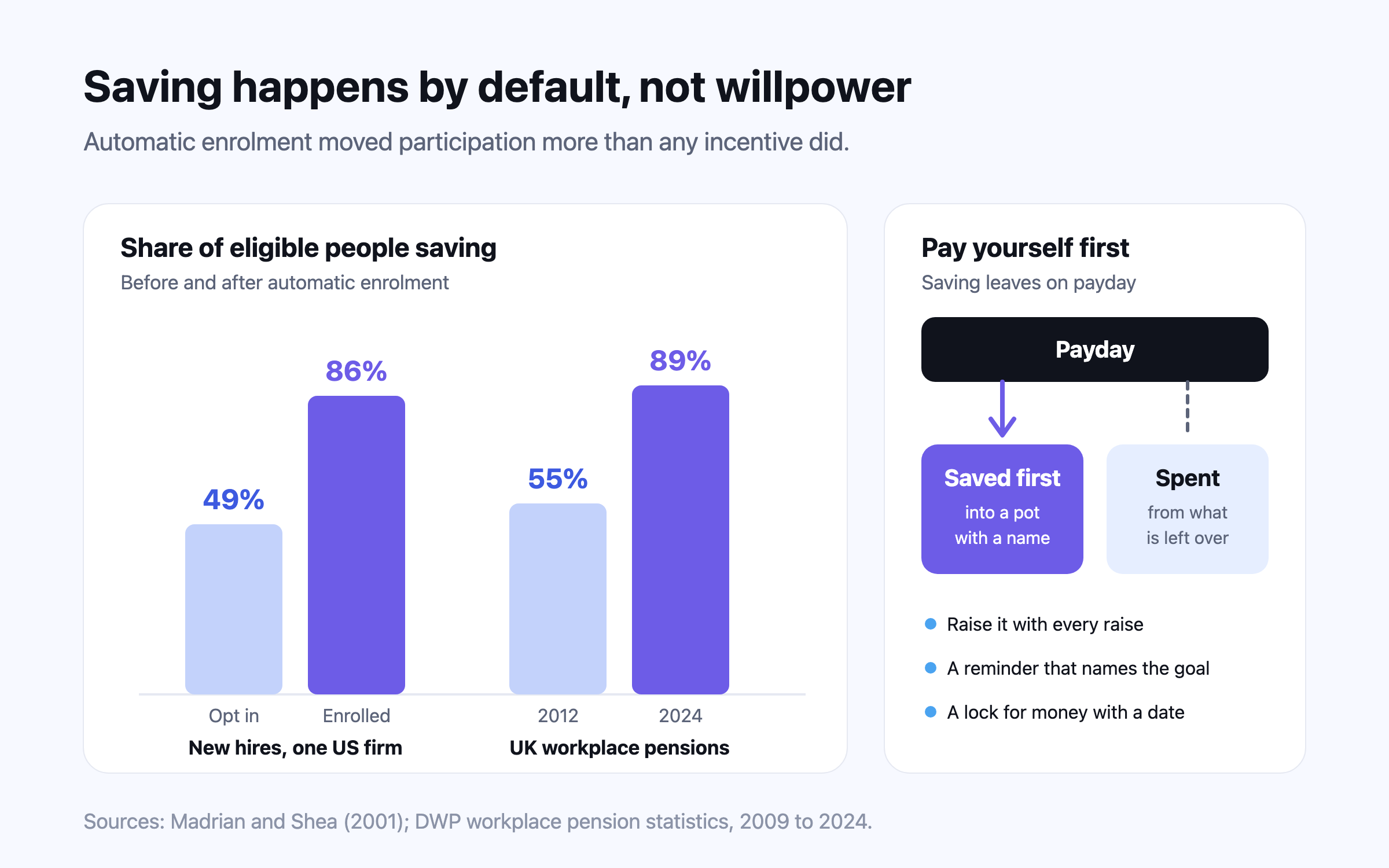
The most reliable way to save more is to make saving happen without a decision each month. In one US company, 86% of staff hired under automatic enrolment were in its 401(k), against 49% of those hired the year before; in Great Britain, workplace pension participation rose from 55% to 89% after automatic enrolment; in Denmark, automatic contributions raised total saving while tax incentives mostly moved money between accounts. Commitment, reminders and clearly labelled pots add to that — information on its own adds surprisingly little.

Budgeting methods compared: 50/30/20 and more

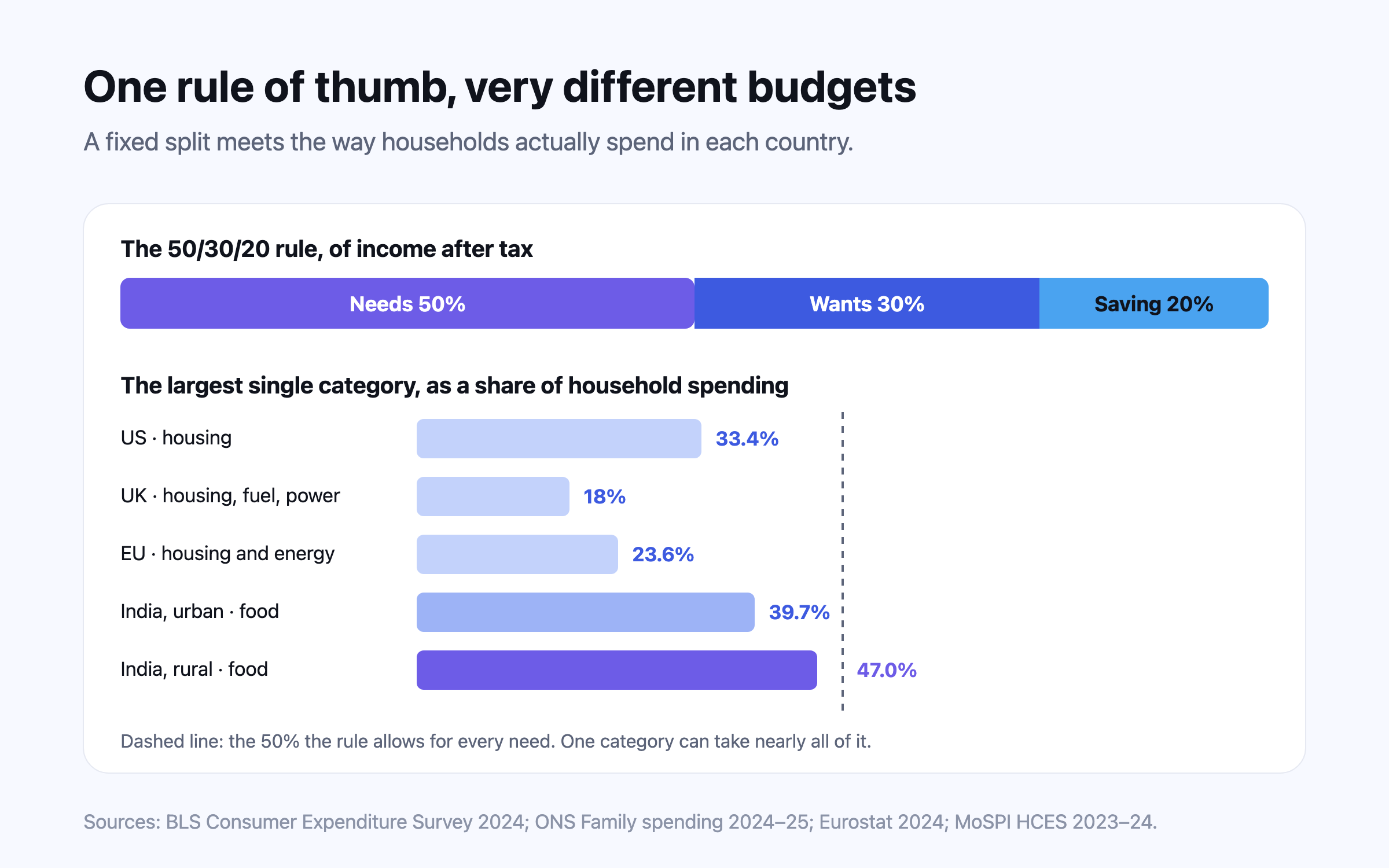
Every popular budgeting method — 50/30/20, zero-based, envelopes and pay-yourself-first — can work, and no rigorous study shows one beating the others. What the research does support is saving automatically, keeping money in separate named pots and knowing where it goes by category. Fixed percentages travel badly: housing is a third of US household spending, while food alone is 47% of the average rural Indian household budget.

How income grows across a career, by country

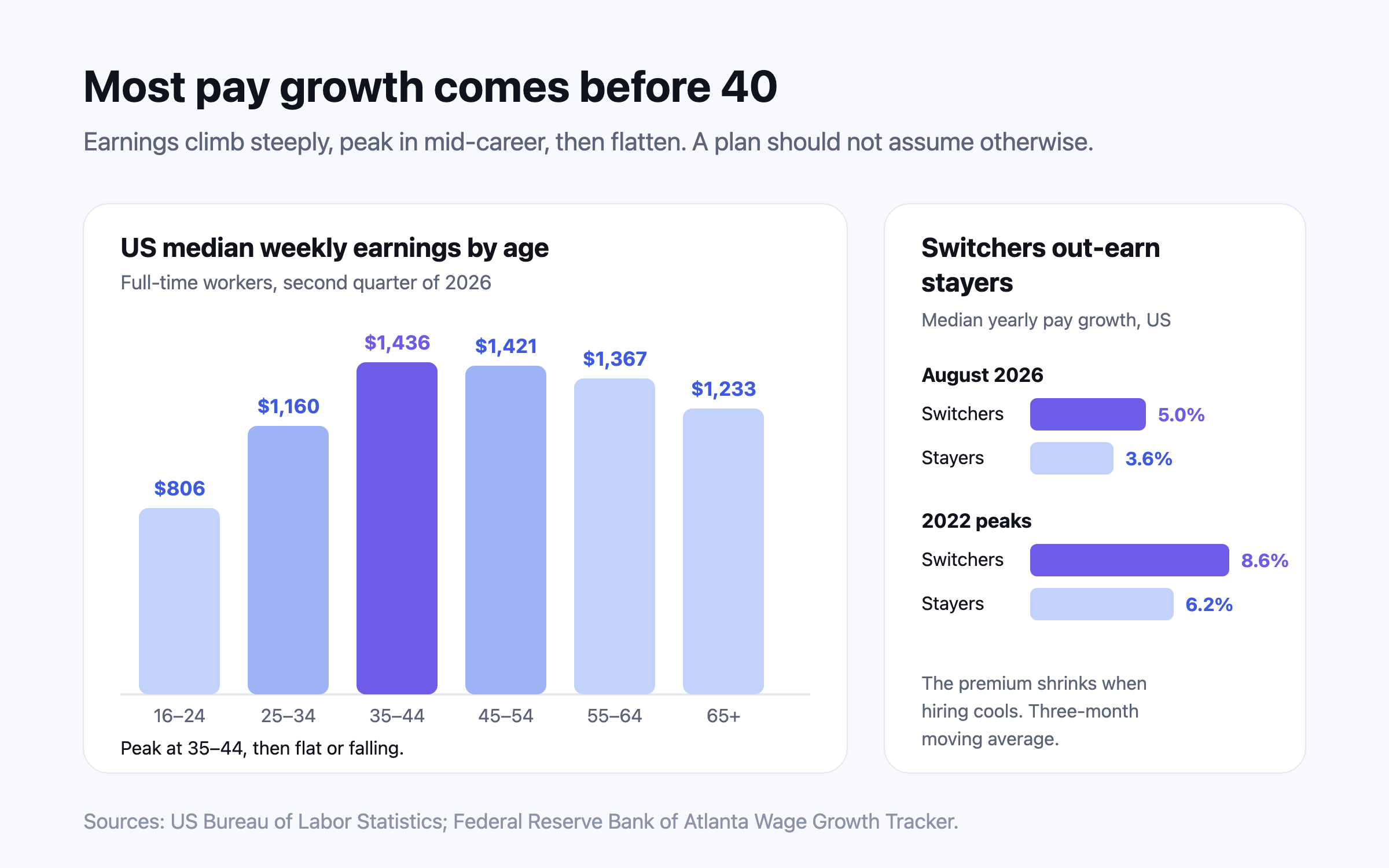
Pay rises fastest in the first decade of work, flattens through the 40s and often falls in the 50s: in the US, median weekly earnings peak at 35–44, and for 80% of men earnings fall between 45 and 55. Job switchers out-earn stayers, a gender gap opens after 30, and only the part of a raise above inflation adds buying power. Plan on modest real growth, and treat the rest as upside.

Pay off debt or invest? The order that matters

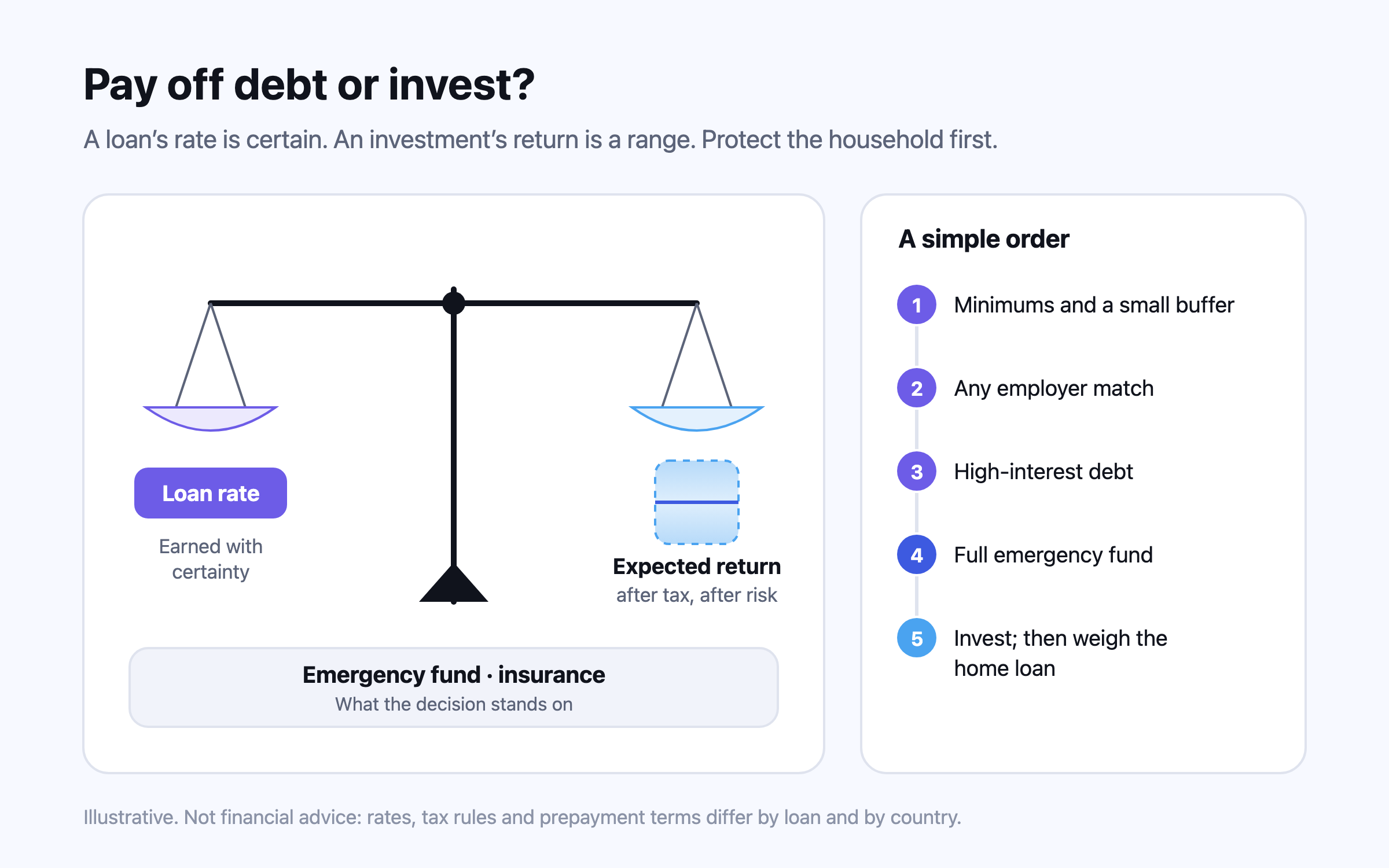
Repaying a loan earns its interest rate with certainty; investing earns an uncertain return, after tax. So costly debt goes first, a low-rate mortgage can sit beside investing, and an emergency fund and the right insurance come before both.

Now run the numbers on your own money.

Nivritee projects your family’s plan in the country you will live in, tracks every investment in one currency, and shows where each pound, dollar or rupee should sit. Free, and nobody here reads your plan.

Start free