Nivritee Research · Investing basics

Investing basics, from the first share to the first fund

How stocks, funds, ETFs and bonds work, what the words mean, and how to start and choose, with the evidence behind each step. 10 articles, every figure sourced.

1

How the stock market works: a beginner’s guide

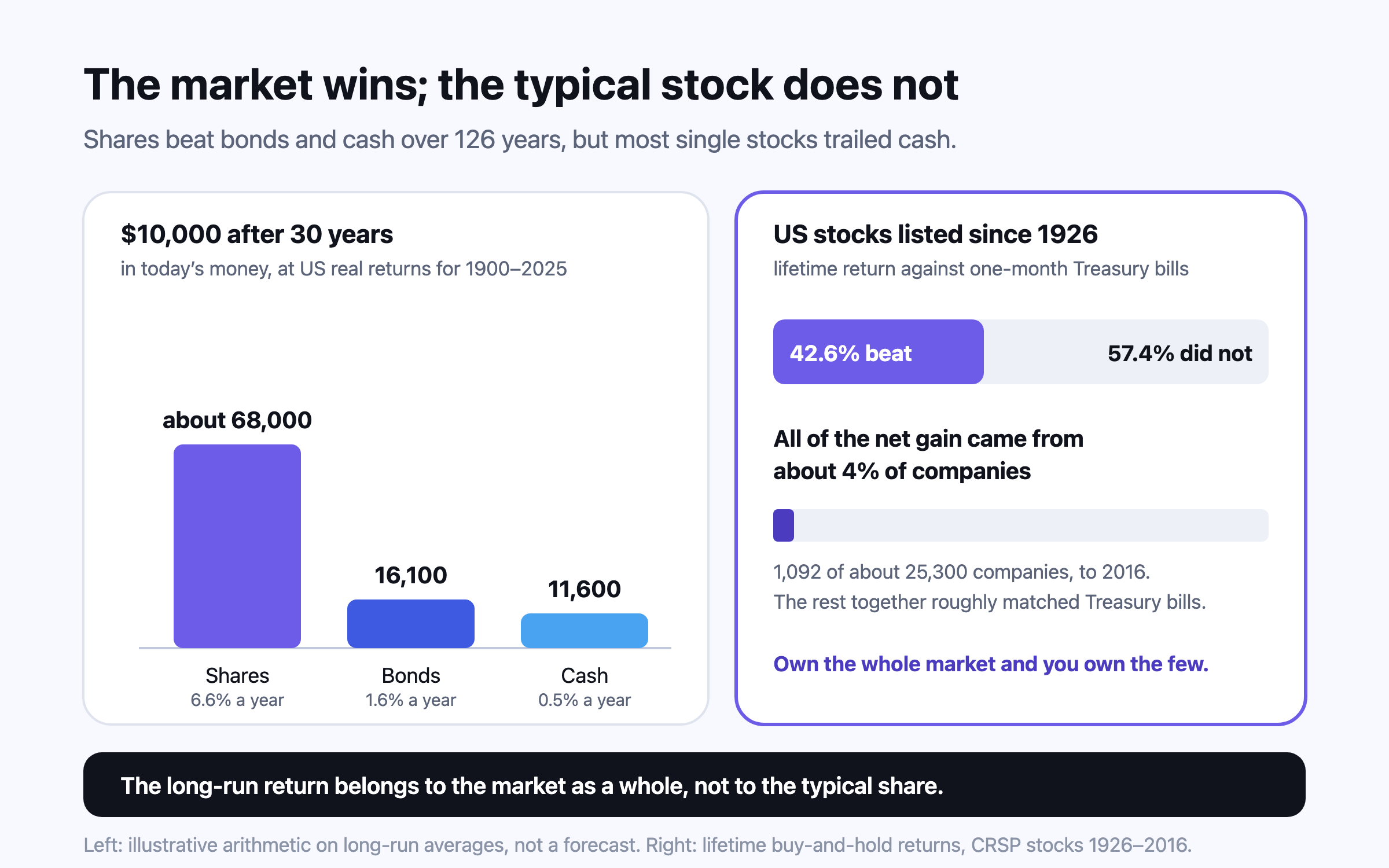
A share is a small part-ownership of a company, bought and sold on an exchange between investors. Over 1900–2025, US shares returned about 6.6% a year after inflation against 1.6% for bonds and 0.5% for cash, and shares were the best asset in every market with a continuous record. But most individual US stocks since 1926 did worse than Treasury bills over their listed lives, and about 4% of companies produced all of the market’s net gain, so the long-run return belongs to the whole market, not to the typical stock.
Investing basics

The rest of the series, in order

2

Mutual funds explained: NAV, costs and types

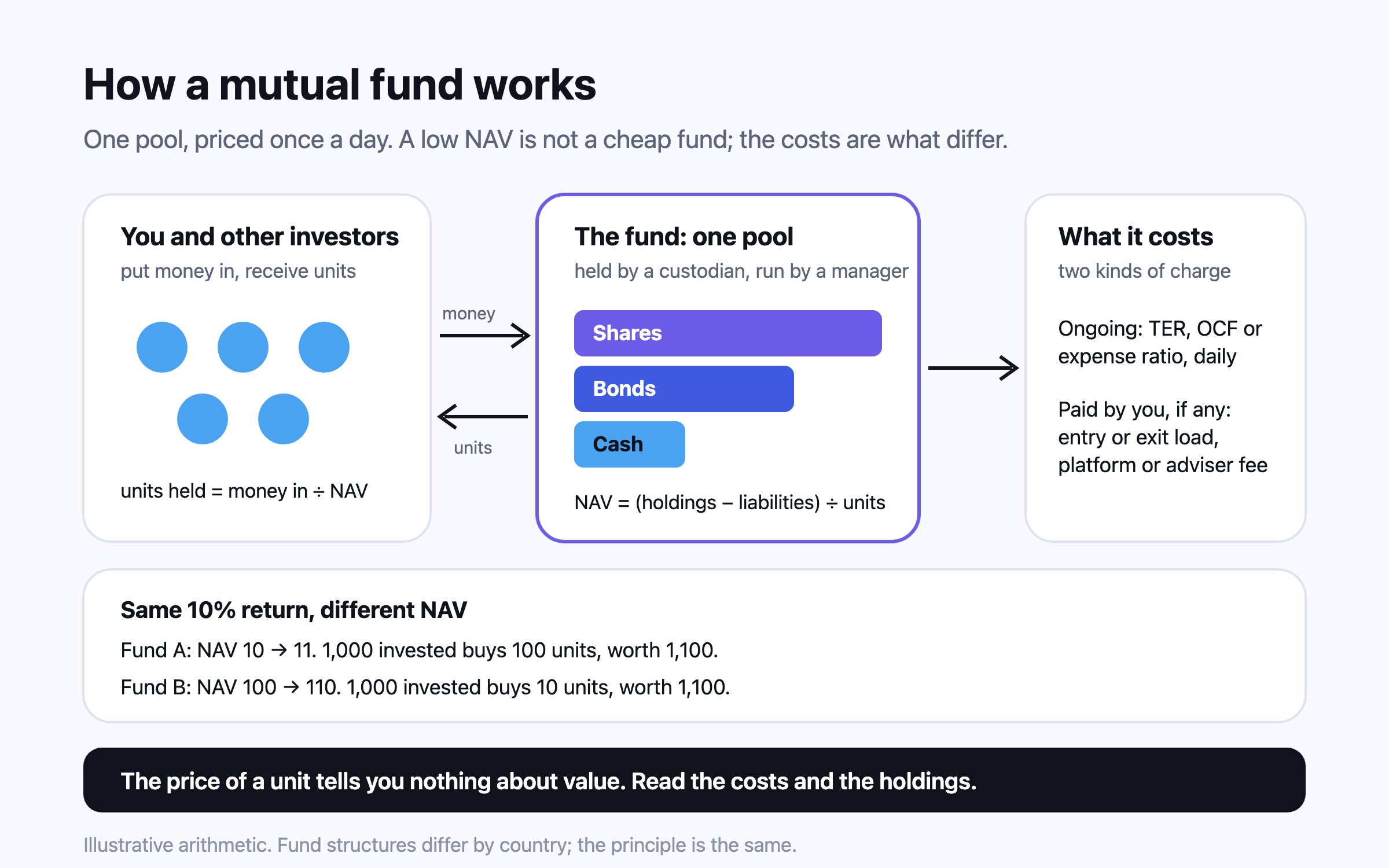
A mutual fund pools many investors’ money into one portfolio and issues units priced at the net asset value (NAV) once a day. The NAV itself says nothing about value; the costs and the holdings do. A yearly charge of 0.9% instead of 0.1% leaves about 17% less after 25 years, most active funds trail their index over long periods, and index mutual funds and index ETFs together held 52% of US long-term fund assets at the end of 2025.

3

ETFs explained: how they work and when to use one

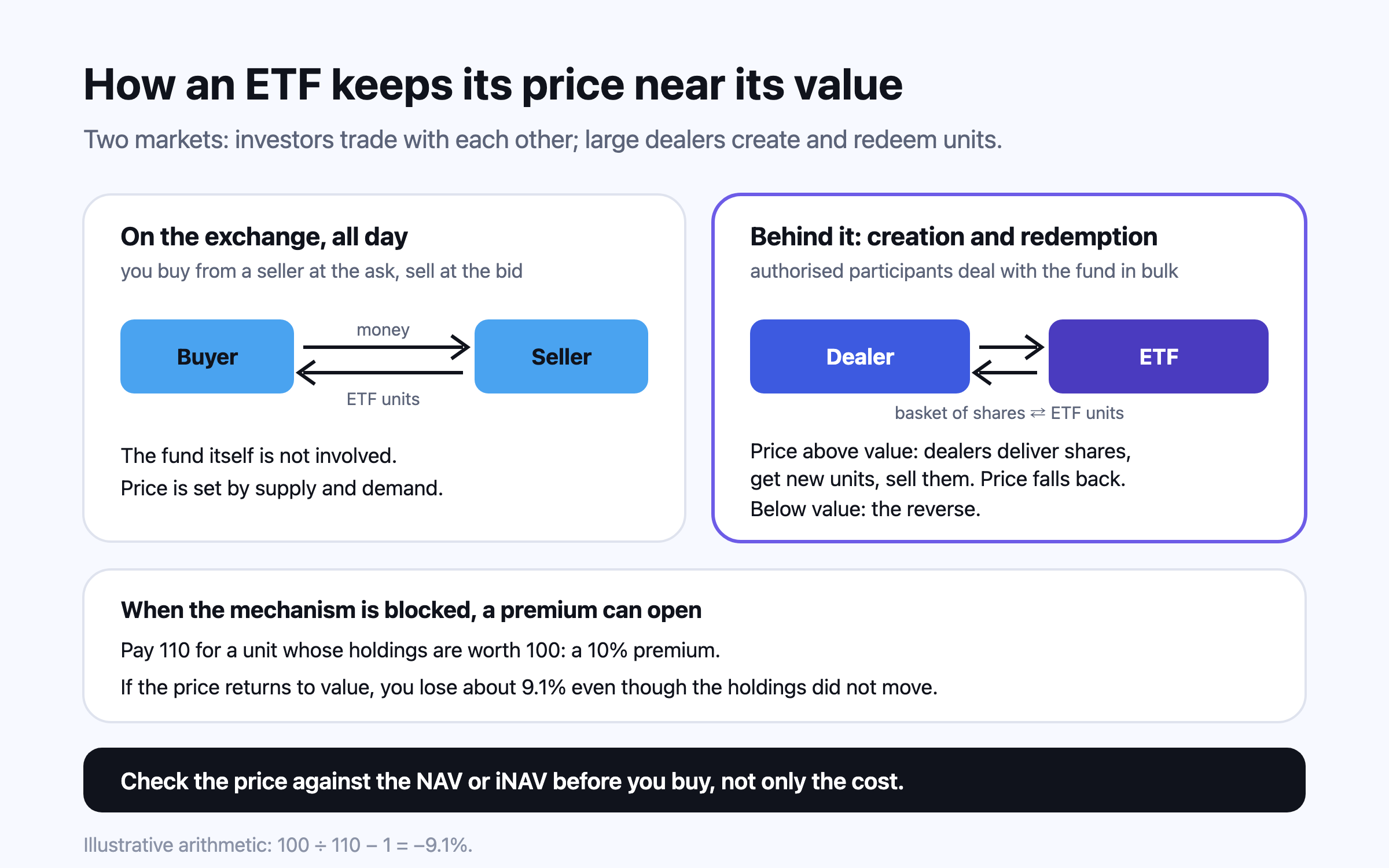
An exchange-traded fund holds a portfolio like a mutual fund but trades on a stock exchange all day. Large dealers create and redeem units to keep its price close to the value of its holdings; when that mechanism is blocked, as for India’s international ETFs in September 2026, prices can run far above value. For investors outside the US, the fund’s domicile decides how much dividend tax is withheld and whether US estate tax applies above US$60,000.

4

Bonds explained: yield, duration and 2022

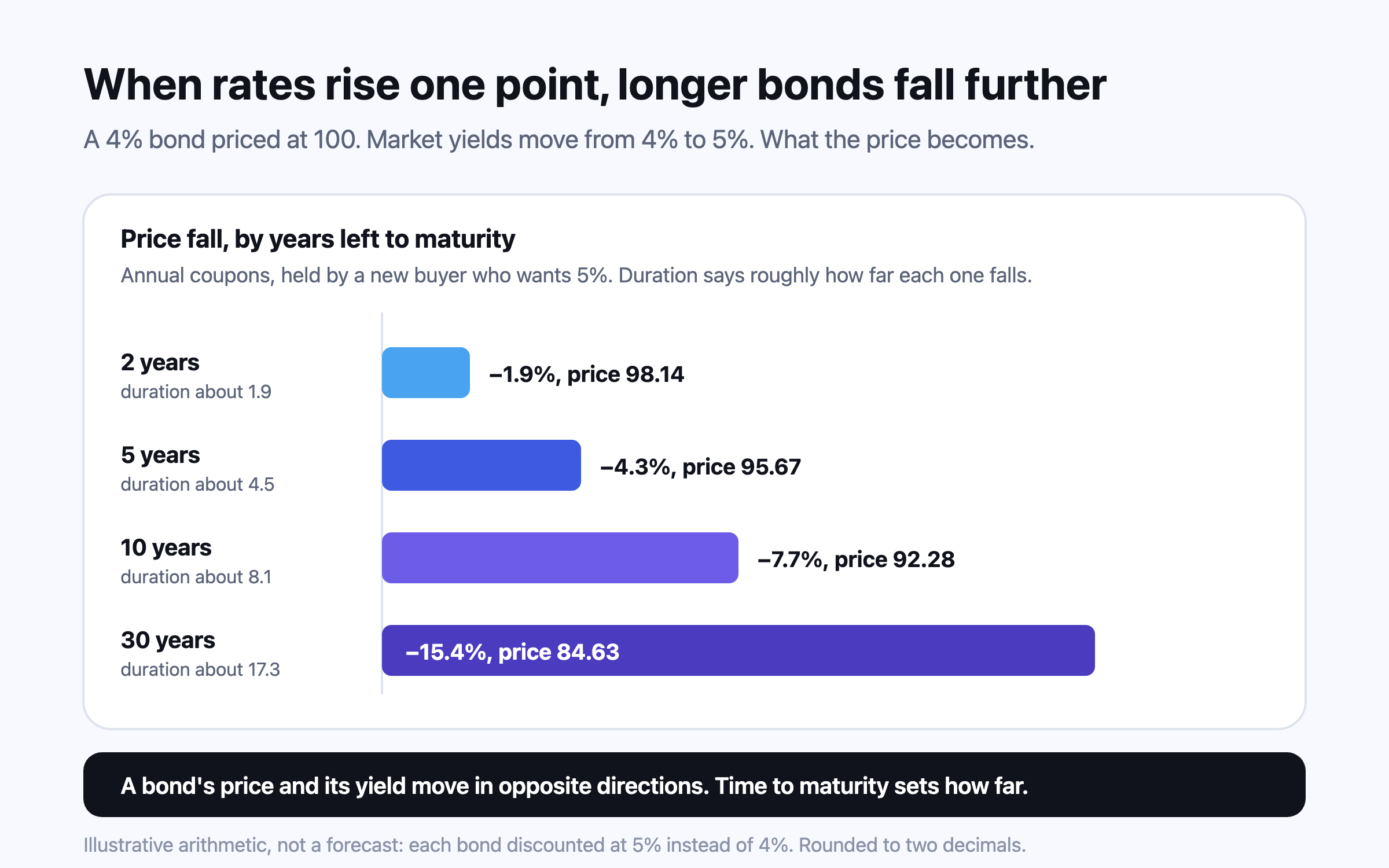
A bond is a loan you can sell. Its coupon is fixed, so when market rates rise its price falls until its yield matches the new rate, by roughly its duration for each percentage point. That is why the US bond market index lost 13.01% in 2022 and UK gilts 23.8%. The same arithmetic now works in savers’ favour: in early October 2026 ten-year government bonds yielded 5.31% in the US, 5.33% in the UK and 7.22% in India.

5

Risk and return explained: what the data shows

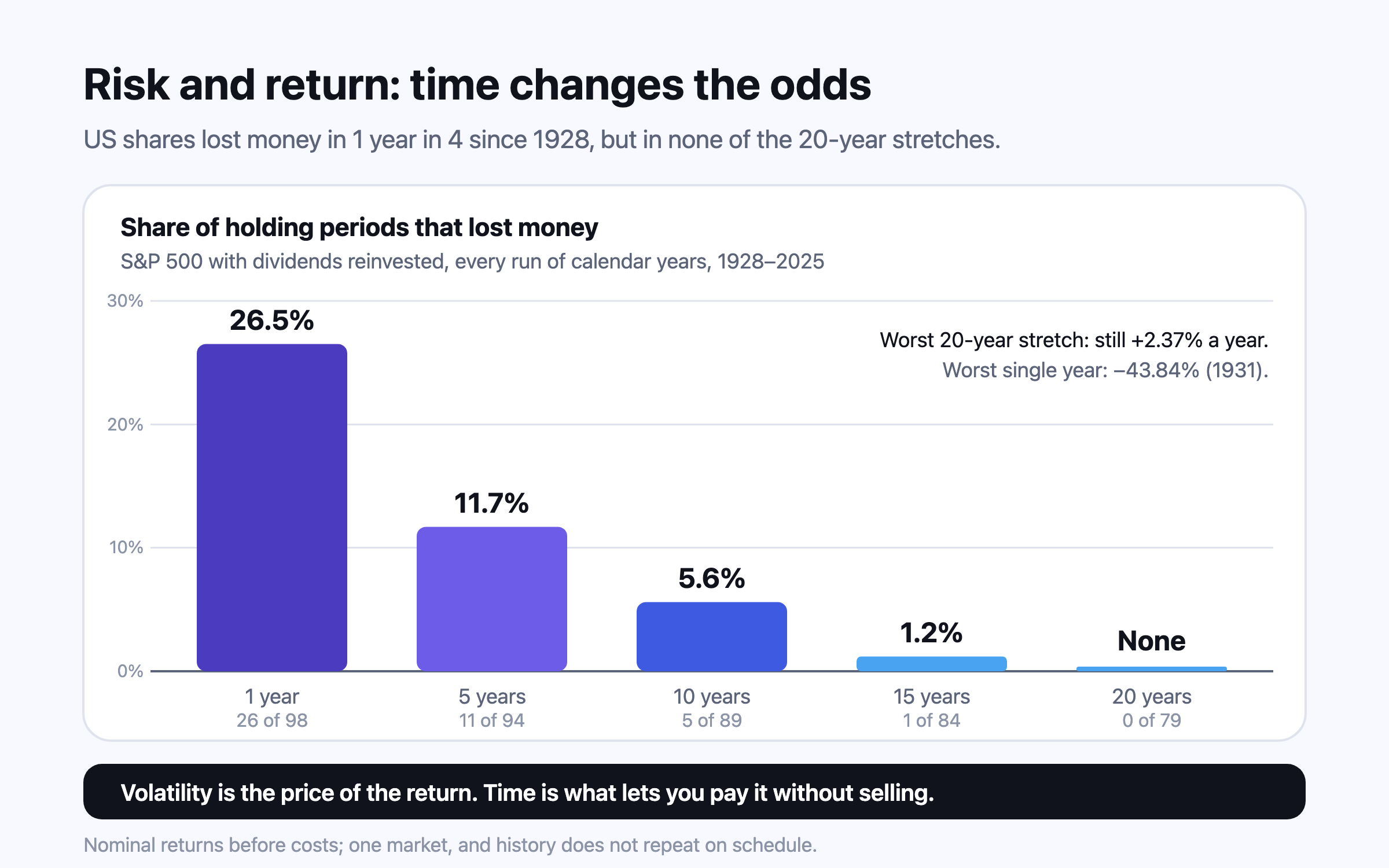
US shares returned about 10% a year from 1928 to 2025 against about 3.4% for Treasury bills, but lost money in 26 of those 98 years and fell 57% from peak to trough in 2007–09. Over every 20-year stretch in that record they still made money. Risk is the price of the extra return: what matters is whether you can afford to wait out a fall and whether you will.

6

Compound interest explained, with worked examples

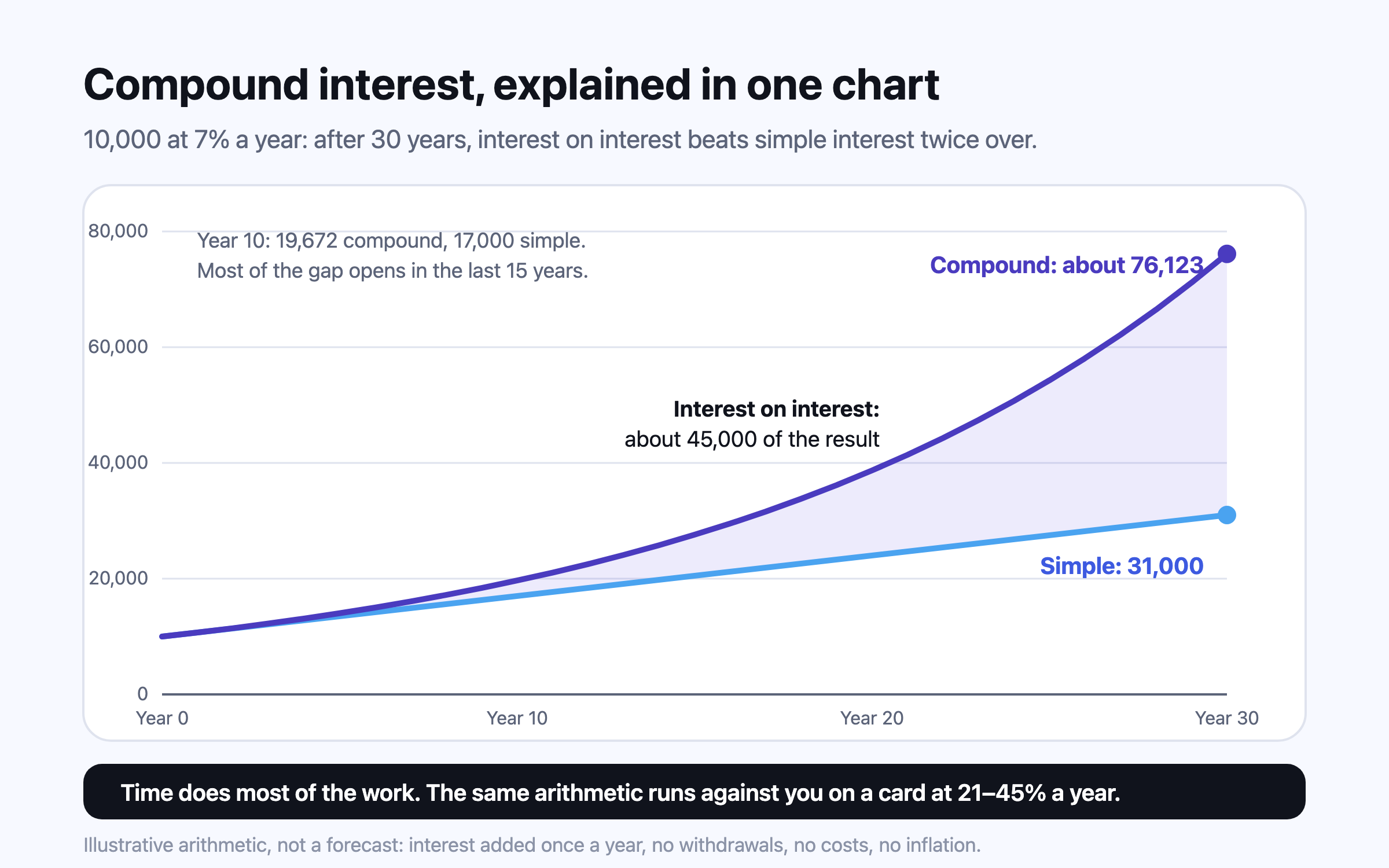
Compound interest is growth on growth: 10,000 at 7% a year becomes about 76,000 in 30 years, against 31,000 if only the original sum earned interest. The rule of 72 estimates doubling time well between about 4% and 12%. Fees and inflation slow compounding, and the same arithmetic on a card charging 21–45% a year doubles a debt in roughly one and a half to three and a half years.

7

Investing terms explained, with worked examples

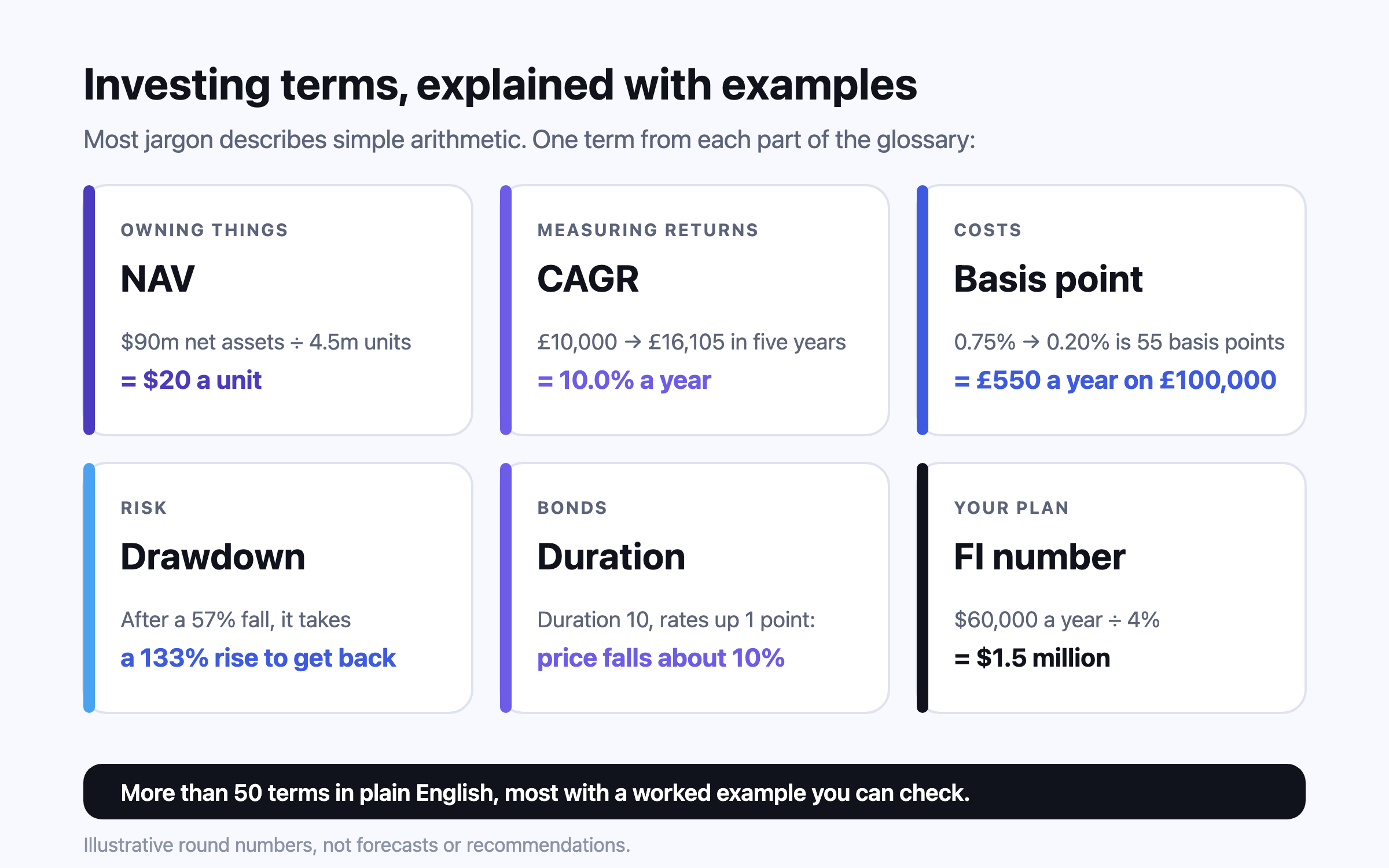
Most investing jargon describes something simple. A basis point is a hundredth of a percentage point; NAV is what one unit of a fund is worth; XIRR is your real yearly return when money went in at different times; duration says how far a bond falls when rates rise. This glossary gives each term a short definition, from a regulator or the original source where one exists, and most of them a worked example you can check.

8

How to start investing: the order that works

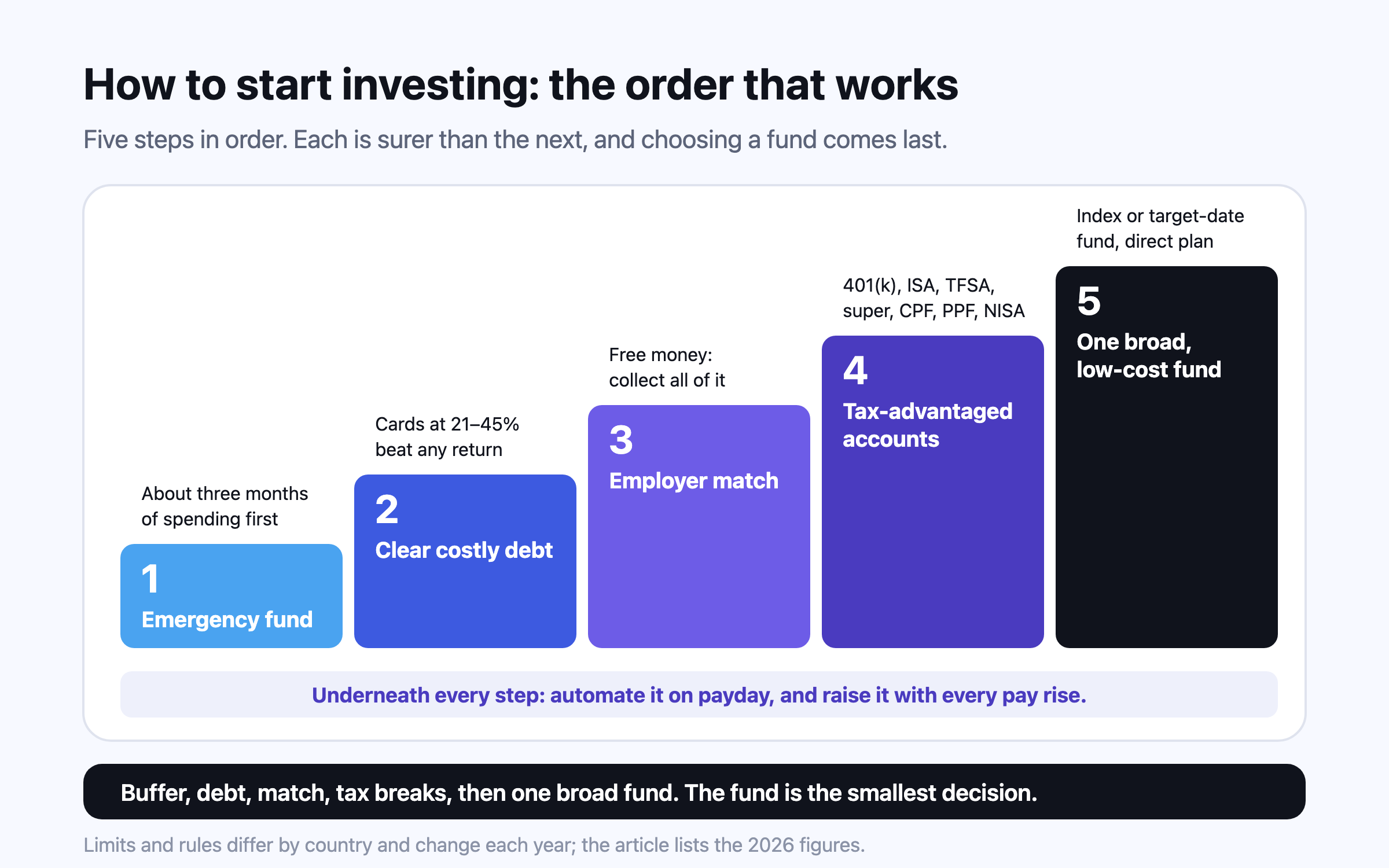
The order matters more than the product: an emergency fund first, then any debt costing more than investments can earn, then free money from an employer and the tax breaks your country offers, then a broad, low-cost index fund. In 2026 that means, for example, up to $24,500 in a US 401(k), £20,000 in a UK ISA, C$7,000 in a TFSA and a 12% employer super contribution in Australia. Automating it does more than picking the perfect fund.

9

How to choose a fund: a practical checklist

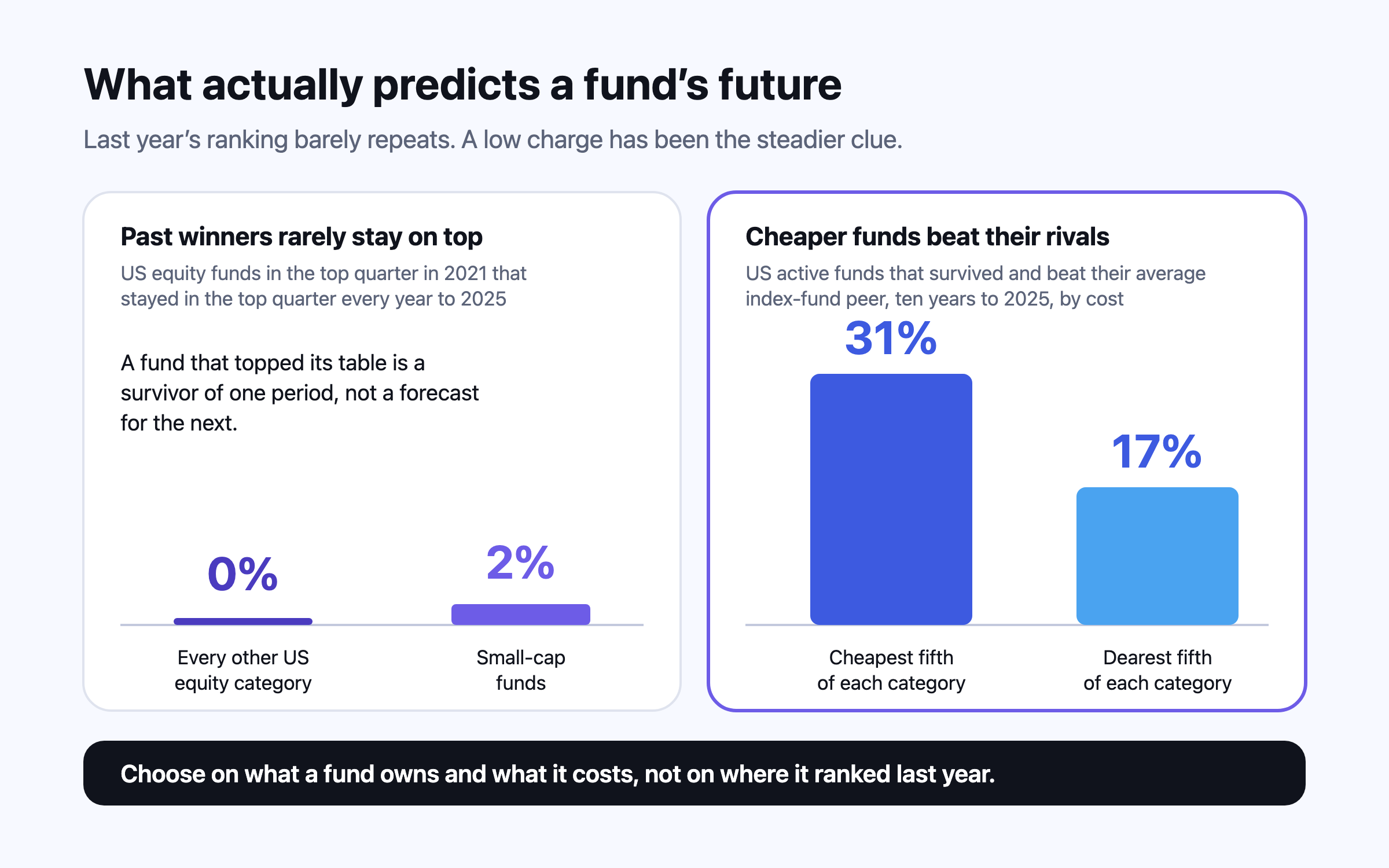
Start with what the fund owns and what it charges; those two decide most of the result. The evidence on past performance is discouraging: almost no US equity fund that was in the top quarter in 2021 stayed there every year to 2025, while Morningstar has called the expense ratio the most proven predictor of future fund returns. For index funds, compare tracking difference, size and, if you live outside the US, where the fund is domiciled.

10

Common investing mistakes and what they cost

Over the ten years to 2025, the average dollar in US funds earned about 1.2 points a year less than the funds themselves, because of when money went in and out — though a 2026 study argues timing explains far less of that. Better evidenced are the costs of heavy trading, leverage and concentration: 87.7% of individual Indian F&O traders lost money in FY26, and the most active US households in one classic study trailed the market by over six points a year.

Now run the numbers on your own money.

Nivritee projects your family’s plan in the country you will live in, tracks every investment in one currency, and shows where each pound, dollar or rupee should sit. Free, and nobody here reads your plan.

Start free